Central Highlands
Kandy
The last kingdom to fall, and still a working religious capital rather than a preserved one.
- 2 nights
- Best Year round; July or August for the Perahera
Kandy held out against the Portuguese and the Dutch for three centuries and finally fell to the British in 1815, by treaty rather than by battle. That late date is why it feels different from the ruined capitals further north: the Kandyan kingdom is recent enough that its architecture, its dance, its drumming and its dress are still current rather than reconstructed.
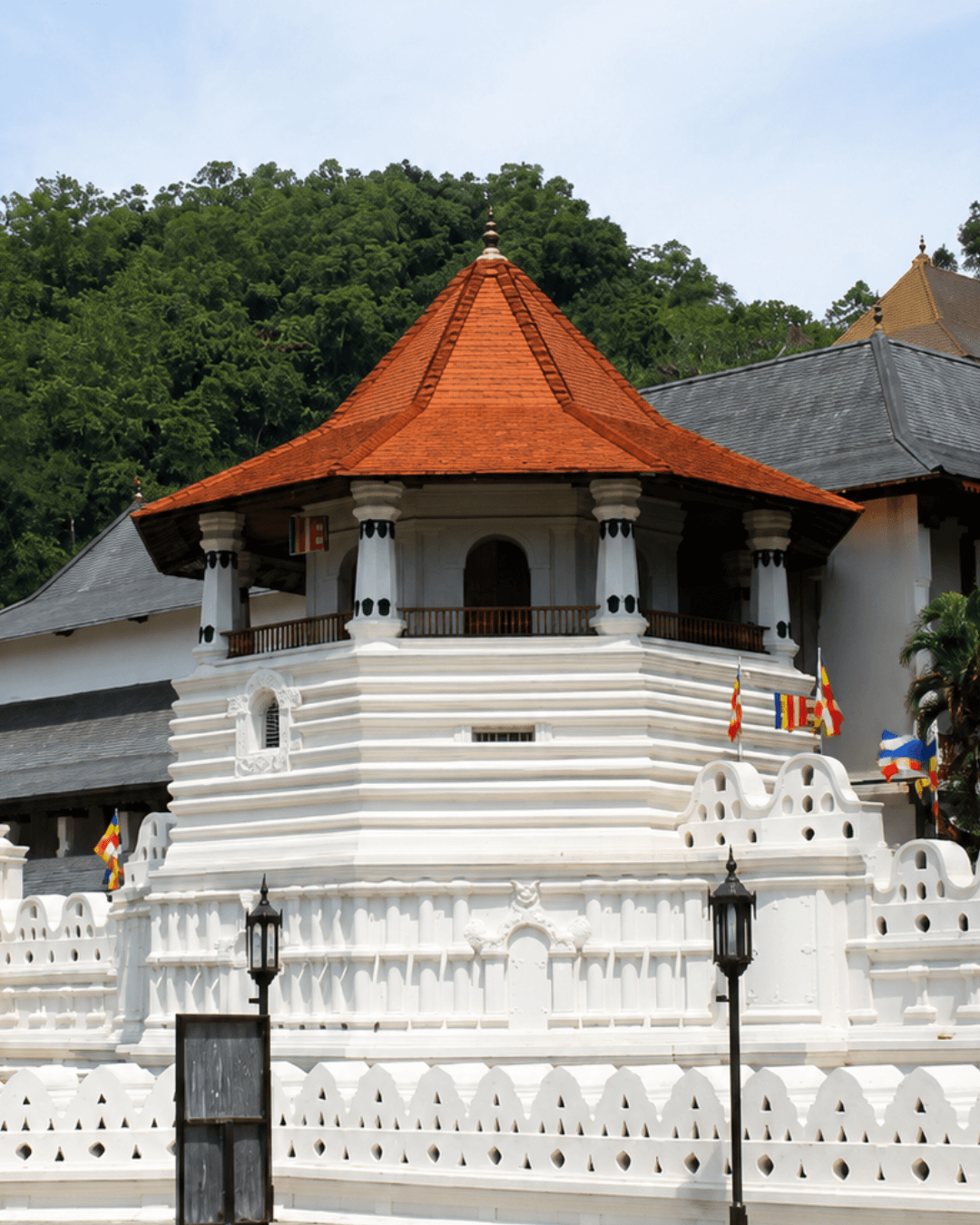
At the centre is the Sri Dalada Maligawa, which houses a tooth of the Buddha. Possession of the relic has been tied to the right to rule the island for well over a thousand years, which makes the building less a museum than a functioning seat of legitimacy. Three times a day the shrine opens for puja, drummers play in the corridor, and a queue of people who are unambiguously there to worship files past.
The lake in front of it looks natural and is not — the last king had it dug in 1807, a project unpopular enough to have contributed to his fall. The city around it is congested, hilly, and completely ordinary in a way that visitors sometimes find disappointing and we find reassuring.
Why come here
What Kandy is for
- 01
A living temple
Evening puja at the Maligawa is not a performance for visitors. Standing in it is the single most direct encounter with practising Buddhism available to a traveller here.
- 02
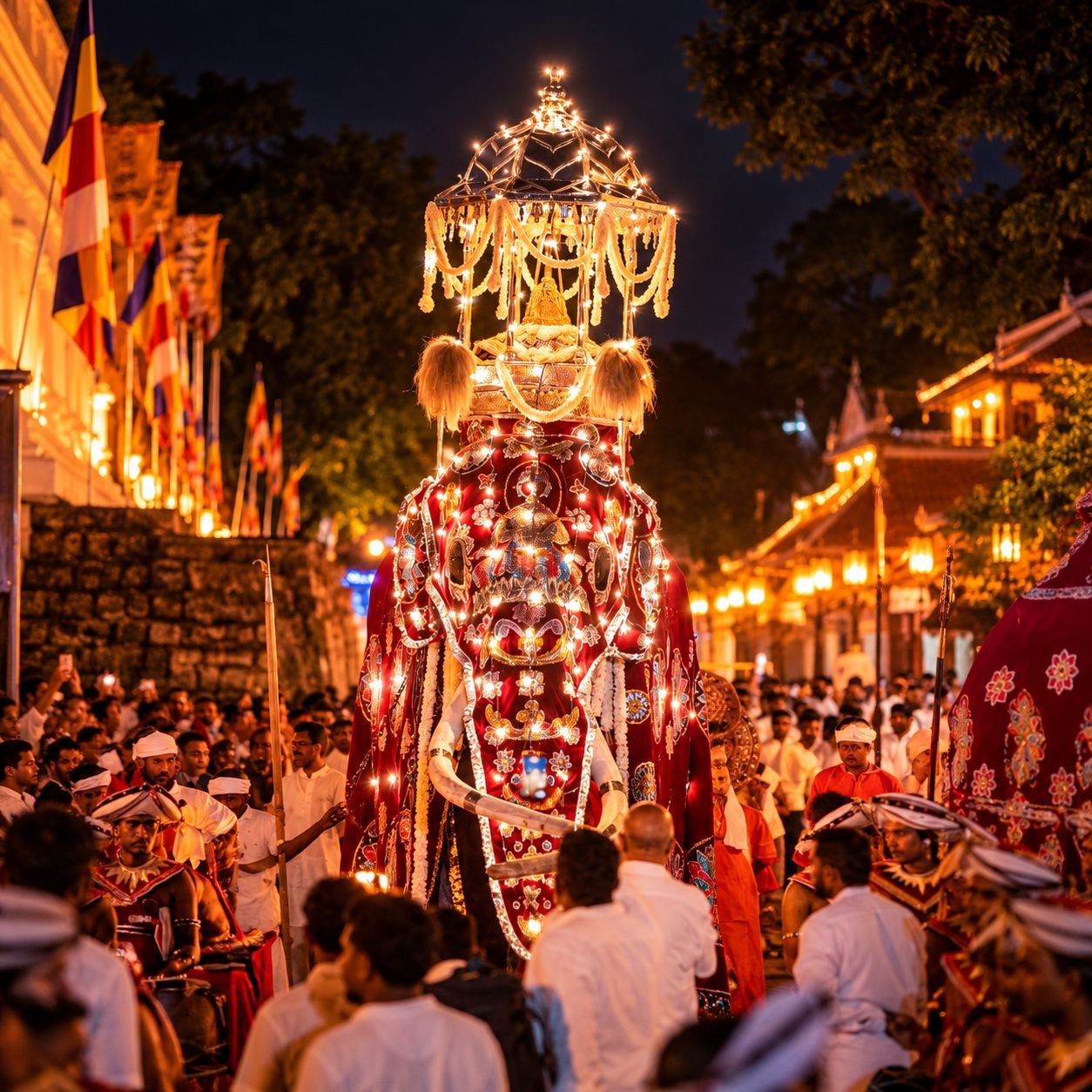
The Esala Perahera
Ten nights in July or August of caparisoned elephants, fire dancers and Kandyan drummers processing through the streets. It is one of the great religious processions in Asia and it is not staged for tourism.
- 03
The gateway to the hills
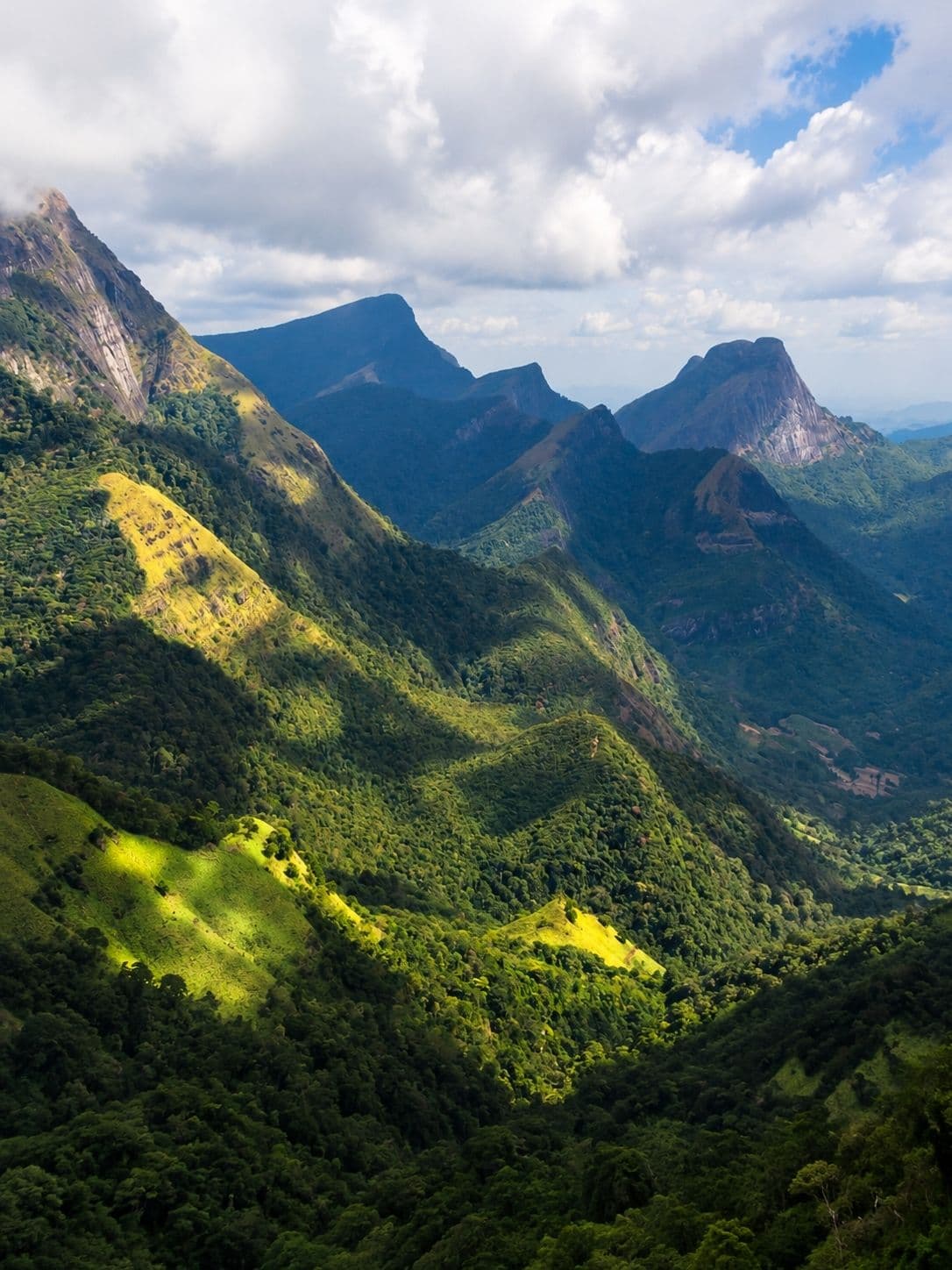
The road and the railway both climb out of Kandy into tea country. It is the natural hinge between the Cultural Triangle and the highlands.
Top experiences
What we would actually do
Not a list of everything possible — the handful of things we put into itineraries, and when.
Evening puja at the Temple of the Tooth
The half past six ceremony, with the drumming in the corridor outside. Arrive twenty minutes early and stand near the drummers rather than in the queue.
Peradeniya Botanical Gardens
Sixty hectares laid out on a loop of the Mahaweli river, on the site of a Kandyan royal garden. The avenue of palms and the giant Javan fig are the reasons to come.
The hill road to Nuwara Eliya
Either by car through the tea estates or on the train from Kandy — the latter is the beginning of the most photographed rail journey in Asia.
A Kandyan dance and drumming performance
Touristic, undeniably, but the drumming is the real thing and the costume tradition is unbroken. An hour well spent if you go in with the right expectations.
Highlights
The things themselves
Sri Dalada Maligawa
The Temple of the Sacred Tooth Relic, and the reason the city exists in its present form.
Kandy Lake
Artificial, 1807, and the pleasantest walk in the city at dusk.
Royal Botanic Gardens, Peradeniya
Six kilometres west, and among the finest botanical gardens in Asia.
The Udawattakele forest reserve
The old royal forest, directly behind the temple, full of birds and monkeys.
Bahirawakanda Buddha
A white standing Buddha above the town, mostly worth it for the view back down.
Working out how many nights Kandy is worth?
It is the question we answer most often, and the honest answer changes with what else is on your route. Tell us where else you are going and we will tell you how long to stay here.
Travel information
The practical part
- Suggested duration
2 nights
One full day covers the temple and the gardens without hurrying. A second is worth it during Perahera, or if you want to walk in Udawattakele in the morning.
- Best time to visit
Year round; July or August for the Perahera
Kandy sits at about five hundred metres, so it is cooler and wetter than the lowlands. Rain here tends to come in the afternoon and clear.
When not to come. If you dislike crowds, avoid Perahera week entirely — the city is at capacity and hotel rates triple.
Travel tips
- 01
Puja times are roughly 5.30am, 9.30am and 6.30pm. The evening one is the most atmospheric and the most crowded.
- 02
White or pale clothing is customary at the Maligawa, and shoulders and knees must be covered. Shoes off at the entrance.
- 03
Perahera accommodation and viewing seats need to be arranged months ahead. If you want to see it, tell us early.
- 04
The train onward to Ella leaves Kandy in the morning; reserved seats sell out weeks in advance and we book them for you.
Recommended journeys
Itineraries that include Kandy
Each is private and fully adjustable — a shape to start from rather than a package to buy.
Nearby
What pairs with it
Sri Lanka is small, and the best itineraries cluster rather than criss-cross. These are the natural neighbours.
Questions
About Kandy
No. The relic is inside a series of nested gold caskets, and what you file past is the outermost casket in its chamber. It is displayed publicly only very rarely — the last exposition was a national event.
It follows the lunar calendar and falls in July or August, running for ten nights and building each night to the final Randoli Perahera. The dates are confirmed only a few months ahead, which is why planning around it needs flexibility.
Yes, though not because there is a long list of sights. The value is in not rushing the temple and having a morning free for the gardens or the forest before you climb into the hills.
Keep reading
More on Kandy
Longer pieces from the journal, and the wider trips this place belongs to.
Start planning
Build a journey around Kandy.
Tell us when you are thinking of travelling and we will tell you honestly whether Kandy is right for those months — and what to pair it with.