The Kandy to Ella train, honestly
It is the most photographed railway journey in Asia and it is genuinely worth doing. Here is what the photographs leave out.
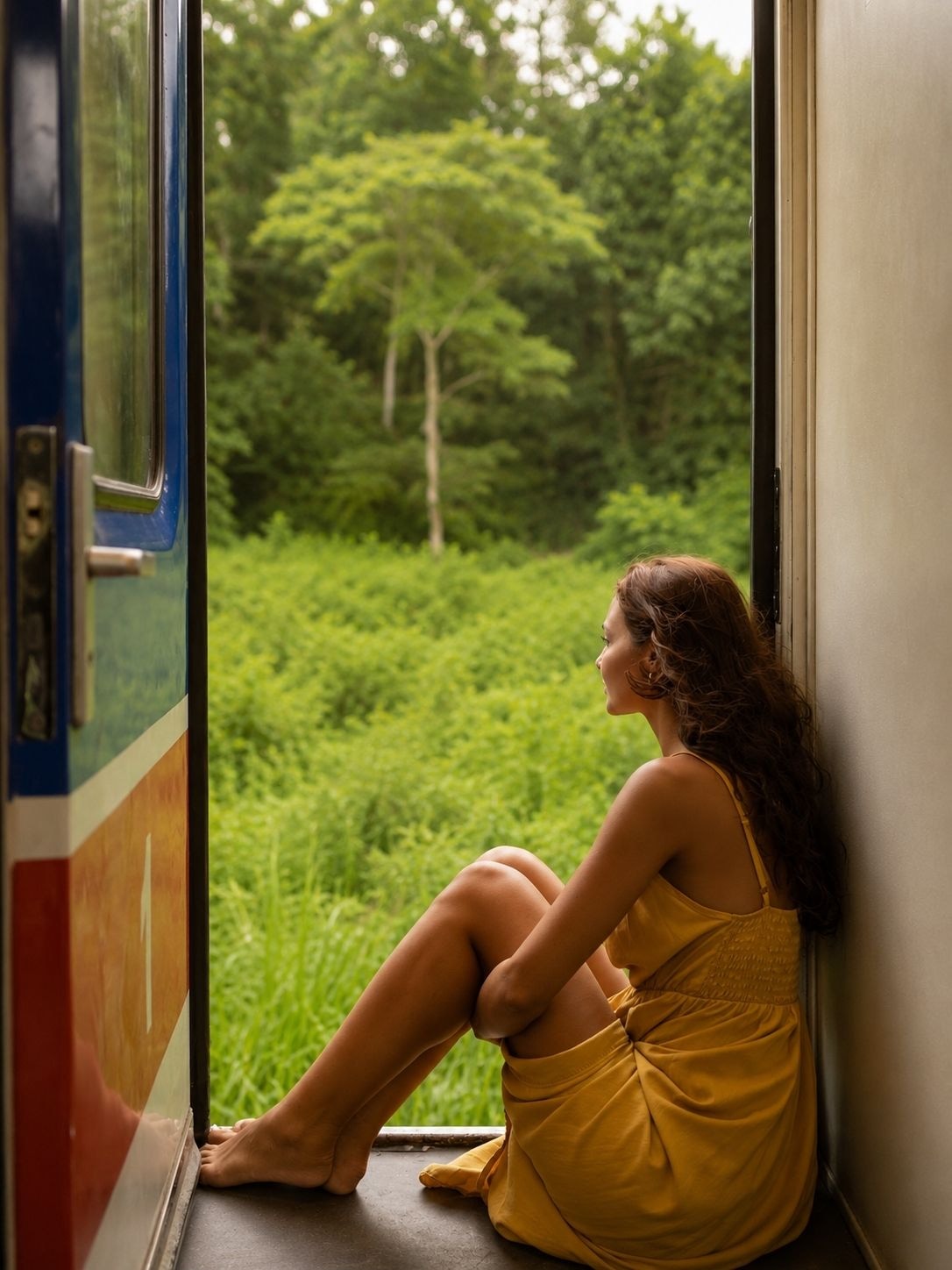
A photograph of someone hanging out of a blue carriage above a tea terrace has probably sold more Sri Lankan holidays than any marketing campaign ever run. The journey deserves the attention. It also involves several hours on a hard seat, and a number of decisions that determine whether you spend them looking at the highlands or at somebody's rucksack.
What the journey actually is
The line was built by the British to move tea down from the highlands to the port at Colombo, and it climbs to over eighteen hundred metres at Pattipola — the highest broad-gauge station in the country. It was engineering of a fairly heroic kind, and almost none of the alignment has changed since.
The full run from Kandy to Ella takes six to seven hours. The section people photograph — the tea terraces, the viaducts, the cloud — is largely the last three, from Nanu Oya onward. Before that you spend a couple of hours climbing through forest and small towns, which is pleasant rather than spectacular.
Seats, classes and the booking problem
There are three classes and they are not simply better and worse versions of each other. First class observation saloon is at the rear with large windows, air conditioning on some services, and — importantly — windows that do not open. Second class reserved has open windows and ceiling fans, and is where most people are happiest. Third class unreserved is a scrum, and also where the atmosphere is.
- Reserved seats go on sale thirty days before departure and the good services sell out within hours in high season.
- Sit on the right-hand side travelling from Kandy towards Ella for the better views on the majority of the run.
- Unreserved third class means standing for several hours in peak months. It is done cheerfully by a lot of people, but do not plan it with luggage.
- Your vehicle and driver can carry the bags round by road and meet you at the far end, which removes the single biggest practical problem.
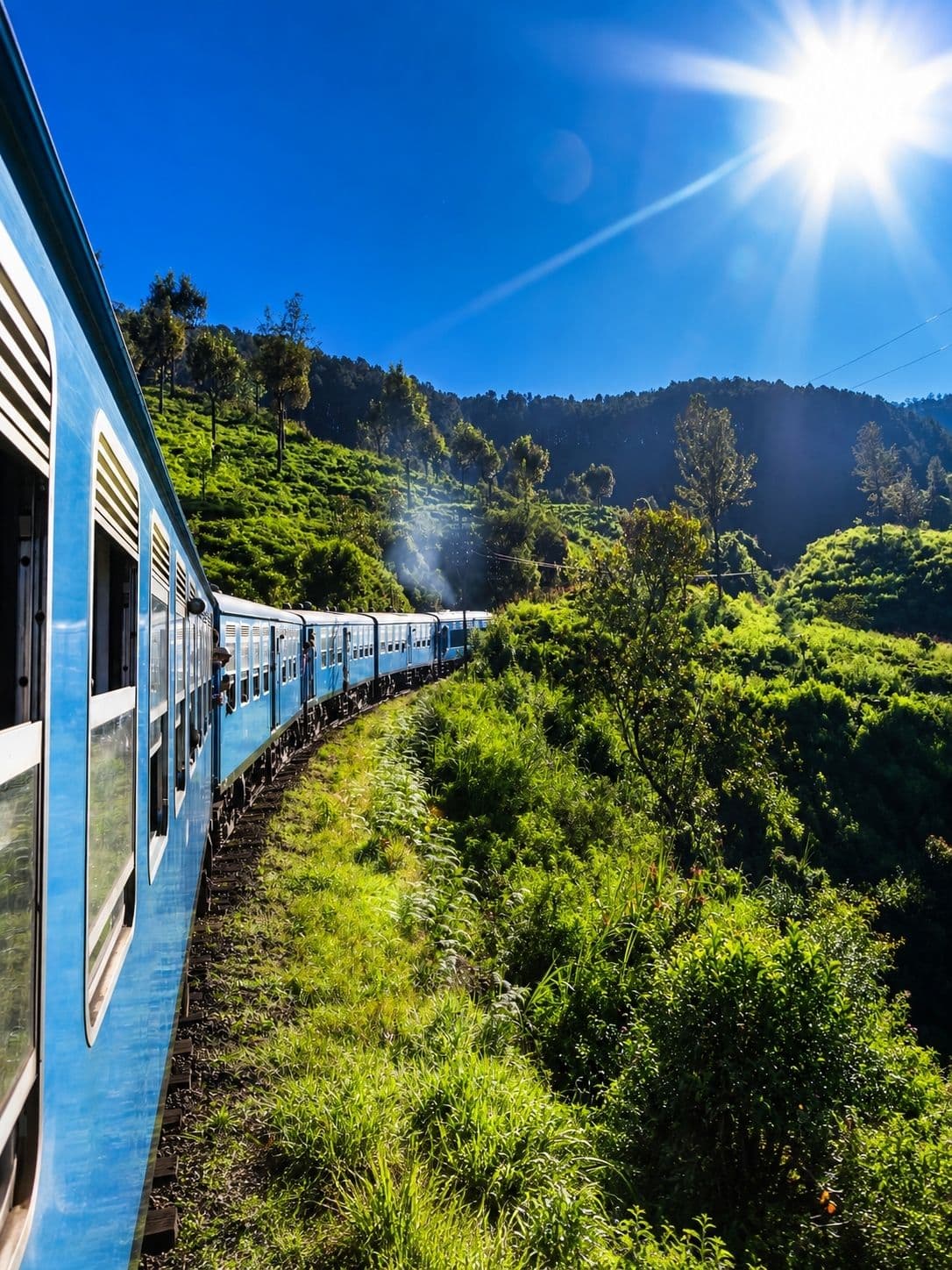
About hanging out of the door
The photograph everyone wants involves leaning out of an open doorway while the train is moving. It is not forbidden, the doors genuinely do stay open, and Sri Lankan passengers ride that way routinely. It is also how people are seriously injured on this line most years, usually by a bridge parapet, a tunnel mouth or a signal post that arrives without warning at head height.
We are not going to tell you not to stand in the doorway. We will say that holding on with both hands, keeping your body inside the door frame, and knowing that tunnels come without warning covers most of the actual risk. Ask your guide which stretches have tight clearances.
Nine Arch Bridge, and the crowd problem
The viaduct at Demodara — built in stone and brick during a wartime steel shortage — is twenty minutes on foot from Ella and is the other photograph everyone has seen. By nine in the morning there can be a hundred people on and around it, queueing to be photographed on the track.
Go for the first train of the day. It is quiet, the light comes down the valley rather than flat overhead, and you will have the structure more or less to yourself. This is the same advice as for Sigiriya, Yala and Little Adam's Peak, and it is the single most useful habit a visitor to Sri Lanka can adopt.
Everything good about Ella happens before eight in the morning or after five in the afternoon. The rest of the day belongs to the coaches.
So is it worth it?
Yes, with a caveat. If you are expecting a serene private carriage gliding through empty tea gardens, you will be surprised by how many people are having exactly the same idea. If you are prepared for a busy, noisy, sociable train with extraordinary scenery outside it, it is one of the best things you will do in Sri Lanka.
The alternative is worth stating: the same route by road takes about half the time, and the tea estates are just as beautiful from a car you can stop whenever you like. On a short itinerary, or with anyone who does not enjoy trains, that is not a compromise — it is the better option.
Discussion
Your turn — been there, or heading there?
Questions
What people ask us
The right-hand side travelling from Kandy towards Ella gives the better views for most of the run, particularly on the section after Nanu Oya. Coming the other way, sit on the left.
They release thirty days before departure and sell out within hours on popular services in high season. We book them as soon as your dates are confirmed.
Yes, but take the shorter Nanu Oya to Ella leg rather than the full run from Kandy. Three hours is manageable; seven with a small child on a hard seat is a long day for everyone.
Your driver takes it round by road and meets you at the destination station. There is limited luggage space on board and managing large cases on a crowded train is genuinely difficult.
Journeys
Where this turns into a trip
Each is private and fully adjustable — a shape to start from rather than a package.
Places
Mentioned in this piece
Keep reading
More from the journal
Travel Tips7 min read
Kandy to Nuwara Eliya: the best way to get there
Road is usually the sensible answer, but the train can still be part of a good plan if you treat it as one leg of a hill-country journey rather than the whole solution.
Travel Tips8 min read
Ella in December: is it worth visiting?
A practical guide to weather, things to do, and how many nights to spend in Ella in December, with the trade-offs that matter.
Wildlife7 min read
Horton Plains National Park: how to visit it well
A practical guide to Sri Lanka’s highland plateau: the best time to go, how to reach the park, what the trail involves, and what to skip.
When you are ready
Turn this into a journey.
Tell us roughly when you want to travel and what matters to you, and we will come back with a considered outline.