Horton Plains National Park: how to visit it well
A practical guide to Sri Lanka’s highland plateau: the best time to go, how to reach the park, what the trail involves, and what to skip.
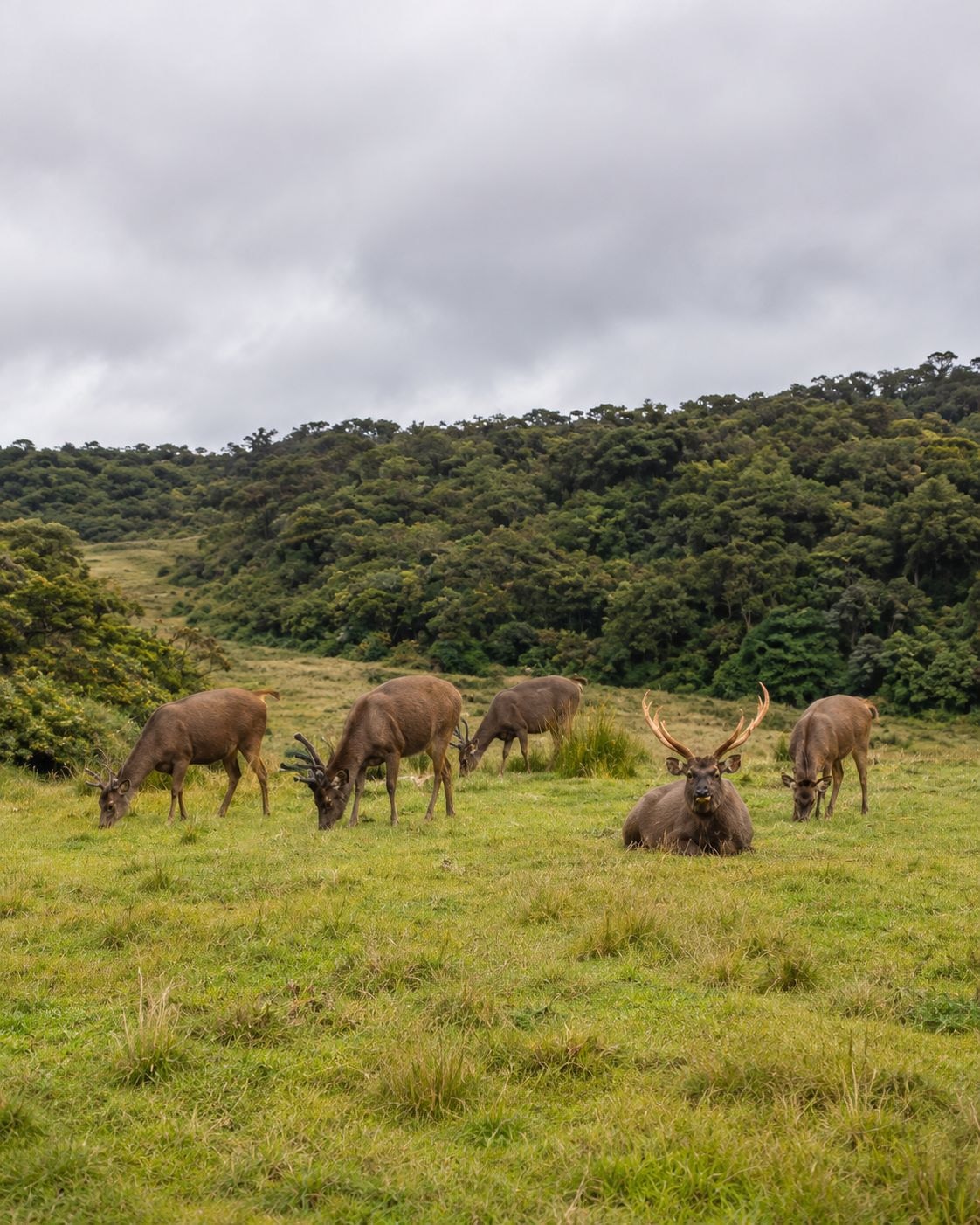
Horton Plains National Park is worth the detour if you want Sri Lanka’s highlands at their coldest, emptiest, and most dramatic. Go early, not late: the main loop is best done in the morning, when World’s End is most likely to be clear and the cloud forest still feels fresh rather than swallowed by mist. (srilanka.travel)
What is Horton Plains National Park, and is it worth the effort?
Yes, if you like walking more than ticking off sights. Horton Plains sits at about 2,100 metres above sea level and is one of the most visited protected areas in Sri Lanka, but it still feels quieter than the island’s better-known safari parks because the experience is a highland hike, not a vehicle game drive. (srilanka.travel)
The core attraction is the 9 km circular nature trail, which usually takes around 3 hours at a comfortable pace, though many people spend longer if they stop often for views, birds, and photographs. The loop takes in grassland, cloud forest, Baker’s Falls and the famous escarpment known as World’s End. (srilanka.travel)
What Horton Plains is not: a place for long lie-ins, a wildlife spectacle on the scale of Yala, or a casual half-day add-on. It rewards early starts, good shoes, and patience with the weather.
When should you go for the clearest views?
The plain answer is: go early in the morning. The tourism board says the best window is roughly 6.00 am to 10.00 am, before the clouds close in, and the clearer months are usually January to March. That matches the practical rule locals use: if you want the best chance of seeing World’s End, be on the trail at sunrise rather than after breakfast. (srilanka.travel)
Seasonality matters here more than in many Sri Lankan destinations. The park’s own guidance notes that the escarpment is often obscured by fog in the wetter months, especially April to September. That does not mean you should avoid the park entirely in the rainy period, but you should adjust expectations: the walk may still be lovely, while the famous view may disappear into white. (srilanka.travel)
If you only have one shot at the park, choose an early departure and a dry spell if you can. If you are travelling through the hill country regardless of weather, treat clear views as a bonus, not a promise.
How do you get there without wasting the day?
Most travellers approach Horton Plains from Nuwara Eliya or Ohiya. Sri Lanka Tourism lists road access via Nuwara Eliya, Ambewela and Pattipola, and also via Haputale/Welimada/Boralanda/Ohiya. If you come by train on the Kandy–Badulla or Colombo–Badulla line, Ohiya is the usual rail stop; the park entrance is then reached by road from there. (srilanka.travel)
The choice between the two approaches is mostly about convenience:
- Nuwara Eliya is easier if you are already based in the town.
- Ohiya is better if you want a quieter, more rural base.
- A private car is simplest if you want to arrive early and avoid piecing together transfers.
- A train + tuk-tuk combination can work, but it eats time and flexibility. (visit-hortonplains.lk)
Here is the blunt version: if your priority is a smooth park visit, stay nearby the night before rather than trying to do Horton Plains as a long transfer day. The highlands are beautiful, but they are not efficient.
tip Start before sunrise Aim to enter the park at or just after opening. By late morning, mist often starts to swallow the viewpoints, and you will spend more time looking at cloud than at the landscape.
What will the trail actually feel like?
The main circuit is a walking day, not a technical hike. The route is a loop of grassland and cloud forest, and the official tourism material says the visitor centre starts the 9 km trail. That distance is manageable for most reasonably fit travellers, but the altitude, damp ground and uneven sections make it feel more demanding than a flat coastal walk. (srilanka.travel)
Expect these conditions:
- Cool temperatures even when the rest of Sri Lanka is hot.
- Mud or slippery ground after rain.
- Wind on the exposed plateau.
- Short, sharp changes in visibility as clouds move across the plain.
- A long reward line at World’s End if you arrive early enough. (srilanka.travel)
Horton Plains is less about spectacle on demand and more about timing the light, the mist, and your own pace.
If you want a neat comparison, think of it like this:
The park is most satisfying when you treat the walk as the main event. The viewpoint is not the whole story; the grasslands, cloud forest and the changing weather are part of the appeal.
How much time, money, and planning do you need?
You should plan for a half day at minimum, and a full morning is better. The trail itself is often quoted at around 3 hours, but transport, entry, photo stops and the weather can easily stretch that. (srilanka.travel)
Current visitor guidance says the park is usually open daily from 6.00 am to 6.00 pm, with ticket prices differing for locals and foreign visitors. The same guidance lists foreign adult entry at USD 25, plus additional charges such as service charge and VAT, with the final amount typically landing around USD 30–35 depending on taxes and exchange conditions. The Department of Wildlife Conservation also confirms that entry is by permit under prescribed conditions, and its ePermit system allows visitors to select the park and date in advance. (visit-hortonplains.lk)
A sensible planning checklist looks like this:
- 01Book or arrange transport for an early start.
- 02Carry your passport if you are a foreign visitor, since ticketing is category-based.
- 03Bring cash and a backup card, because connectivity can be unreliable in the highlands.
- 04Wear proper walking shoes and carry a warm layer.
- 05Keep the day flexible, because weather can change the experience fast. (visit-hortonplains.lk)
Do not overcomplicate it, but do not improvise it at the last minute either. Horton Plains is one of those places where small planning mistakes become big discomfort.
Where should you stay if you want the park to work properly?
Stay close enough for an early departure. The official guidance notes that many travellers base themselves in Nuwara Eliya, while the park site also points out that staying near Pattipola or in Ohiya can reduce morning travel time. That is the right way to think about it: choose the base that lets you reach the gate before the mist thickens. (visit-hortonplains.lk)
A simple rule:
- Choose Nuwara Eliya if you want more hotel choice and easier dining.
- Choose Ohiya if you want the shortest, quietest access to the park.
- Choose Pattipola side stays if you are building the visit into a broader hill-country route. (visit-hortonplains.lk)
Horton Plains pairs well with Nuwara Eliya, Ella and the broader tea-country circuit. It also works as a cooler counterpoint in a route that otherwise leans towards beaches and lowland heat. If you are planning a tailor-made private itinerary, this is exactly the kind of stop that benefits from being placed between the right towns rather than added as an afterthought.
What should you pack, and what mistakes should you avoid?
The pack list is simple, but the mistakes are common.
Bring:
- Warm layers for the early start.
- Sturdy shoes with grip.
- Water and light snacks.
- Rain protection if you are visiting outside the driest months.
- Sun protection, because the plateau can warm quickly once the clouds lift. (srilanka.travel)
Avoid these mistakes:
- Turning up late in the morning and expecting a clear World’s End.
- Doing the park as a tired transit day from far away.
- Assuming the weather will stay stable for the entire walk.
- Underestimating how cold the highlands can feel before sunrise.
- Treating the trail like a casual city stroll rather than a real walk. (srilanka.travel)
If you are travelling with limited time, Horton Plains is best when it is not forced. Give it a proper morning, a sensible base and a realistic expectation of mist. That is how the park earns the journey.
FAQ
How long do you need at Horton Plains National Park?
Most travellers should allow half a day. The main loop is around 9 km and often takes about 3 hours, but transport, photo stops and weather can extend the visit. (srilanka.travel)
What is the best time to see World’s End?
The best chance is early morning, ideally between 6.00 am and 10.00 am. The view is often clearer before clouds build up, and the drier January to March period is usually the safest bet for visibility. (srilanka.travel)
Can you visit Horton Plains from Nuwara Eliya in one morning?
Yes. Nuwara Eliya is one of the most practical bases for the park, and the road links are straightforward enough for an early departure. The key is to leave early enough to enter before the mist thickens. (visit-hortonplains.lk)
Is Horton Plains open every day?
Current visitor guidance says the park is usually open daily from 6.00 am to 6.00 pm, but permits and conditions apply. It is best to check the current DWC permit process before you go. (visit-hortonplains.lk)
Is Horton Plains suitable for children?
Yes, for children who are comfortable with a proper walk and cooler weather. It is not an amusement-style outing, so families should be ready for an early start, variable weather and a long loop. (visit-hortonplains.lk)
Discussion
Your turn — been there, or heading there?
Questions
What people ask us
Most travellers should allow half a day. The main loop is around 9 km and often takes about 3 hours, but transport, photo stops and weather can extend the visit.
The best chance is early morning, ideally between 6.00 am and 10.00 am. The view is often clearer before clouds build up, and the drier January to March period is usually the safest bet for visibility.
Yes. Nuwara Eliya is one of the most practical bases for the park, and the road links are straightforward enough for an early departure. The key is to leave early enough to enter before the mist thickens.
Current visitor guidance says the park is usually open daily from 6.00 am to 6.00 pm, but permits and conditions apply. It is best to check the current DWC permit process before you go.
Yes, for children who are comfortable with a proper walk and cooler weather. It is not an amusement-style outing, so families should be ready for an early start, variable weather and a long loop.
Journeys
Where this turns into a trip
Each is private and fully adjustable — a shape to start from rather than a package.
Places
Mentioned in this piece


Keep reading
More from the journal
Wildlife6 min read
Wilpattu National Park: how to visit it well
A practical guide to Sri Lanka’s quieter leopard park: when to go, which gate to use, what time to leave, and how to make the safari worthwhile.
Wildlife6 min read
Udawalawe National Park: how to visit it well
A practical guide to Sri Lanka’s easiest big-game safari: when to go, how long to stay, what to combine it with, and what not to expect.
Wildlife8 min read
Pigeon Island National Park: how to visit it well
A practical guide to Sri Lanka’s marine national park off Nilaveli: when to go, what the snorkelling is like, and when it is not worth the detour.
When you are ready
Turn this into a journey.
Tell us roughly when you want to travel and what matters to you, and we will come back with a considered outline.