Cultural Triangle
Dambulla
Five caves of painted rock, continuously in use for two thousand years, twenty minutes from a more famous neighbour.
- Half a day
- Best January to September
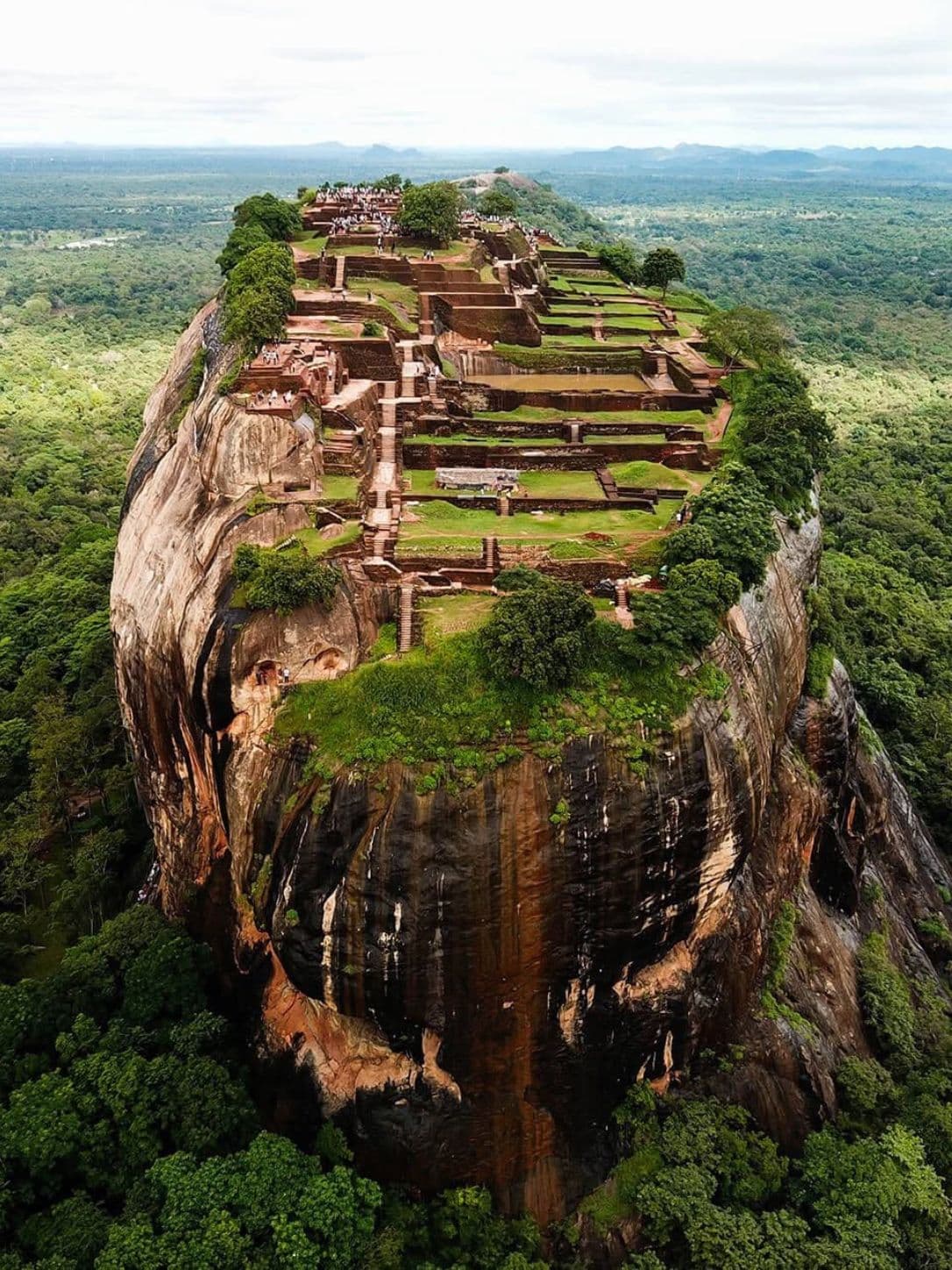
Dambulla has the misfortune of sitting half an hour from Sigiriya, which means most itineraries give it ninety minutes on the way past. That is a mistake in one specific respect: the painting here is far better than anything that survives on the rock.
Valagamba sheltered in these caves in the first century BCE while exiled from Anuradhapura, and endowed them as a monastery when he regained the throne. Successive kings kept adding to them for the next eighteen hundred years, which is why the interiors are a palimpsest — twelfth-century sculpture under eighteenth-century Kandyan paint, all of it following the natural contour of the rock rather than a flat ceiling.
Why come here
What Dambulla is for
- 01
The ceilings
Painted directly onto the undulating rock, so the geometric patterns bend and pool with the stone. Roughly two thousand square metres of it, and unlike almost any other Buddhist cave art in South Asia it has never been abandoned to decay.
- 02
Unbroken use
This is not a ruin. Monks live here, the lamps are lit, and people come to worship rather than to photograph. It changes the feel of the place entirely.
Top experiences
What we would actually do
Not a list of everything possible — the handful of things we put into itineraries, and when.
Cave Two, the Maharaja Viharaya
The largest and the best. Fifty-six standing and seated Buddhas, a spring that drips from the ceiling into a vessel and never runs dry, and the finest of the painted ceilings.
Late afternoon, after the coaches
Most groups arrive mid-morning. From about four the caves empty out, the light comes in sideways through the colonnade, and it becomes a quiet place again.
The wholesale market
Dambulla runs the largest vegetable market in the country, and it operates through the night. It is not a tourist attraction, which is precisely the appeal.
Highlights
The things themselves
The reclining Buddha of Cave One
Fourteen metres, cut from the living rock, with a disciple at the feet.
The painted ceiling of Cave Two
The single best surviving interior of its kind in Sri Lanka.
The dripping spring
Fed from a fissure above and collected for ritual use.
The climb and the view
Twenty minutes of steps, with the whole dry zone and Sigiriya visible from the terrace.
The Golden Temple below
A very large, very gold, very modern Buddha at the foot of the hill. Architecturally unserious and worth seeing for that reason.
Working out how many nights Dambulla is worth?
It is the question we answer most often, and the honest answer changes with what else is on your route. Tell us where else you are going and we will tell you how long to stay here.
Travel information
The practical part
- Suggested duration
Half a day
Almost always visited from a base at Sigiriya or Habarana rather than stayed in. Two to three hours does it properly.
- Best time to visit
January to September
Same dry-zone pattern as Sigiriya. The caves themselves are sheltered, so rain matters less here than on an exposed climb.
Travel tips
- 01
Shoes come off at the terrace and the stone gets extremely hot by the middle of the day. Socks are not a bad idea.
- 02
Shoulders and knees must be covered — this is an active monastery, and enforcement is real rather than nominal.
- 03
The macaques on the staircase will take anything held loosely, including sunglasses and water bottles.
Nearby
What pairs with it
Sri Lanka is small, and the best itineraries cluster rather than criss-cross. These are the natural neighbours.
Questions
About Dambulla
Yes, and arguably more so. They are not the same kind of site: Sigiriya is archaeology and engineering, Dambulla is art and living religion. People who skip it because they have "done a rock" have misunderstood what is here.
Shoulders and knees covered for everyone, shoes and hats off before entering the terrace. A light scarf in your bag solves it.
Start planning
Build a journey around Dambulla.
Tell us when you are thinking of travelling and we will tell you honestly whether Dambulla is right for those months — and what to pair it with.