Polonnaruwa travel guide: how to visit it well
A practical guide to Sri Lanka’s medieval capital: what to see, how long to stay, the best way to move around, and when Polonnaruwa earns a place in your route.
Polonnaruwa travel guide? The short answer is that this is one of Sri Lanka’s most rewarding heritage sites if you give it enough time and do not try to treat it like a quick photo stop. One full day is ideal, half a day is usually too little, and the best way to see it is to move slowly between the main clusters of ruins, preferably by bicycle or with a driver who will wait while you walk. (ccf.gov.lk)
What is Polonnaruwa, and why does it matter?
Polonnaruwa was Sri Lanka’s second ancient capital and later became a UNESCO World Heritage Site. The city rose after the destruction of Anuradhapura and reached its height under King Parakramabahu I in the 12th century, which is why so much of what you see today feels like a coherent royal and monastic landscape rather than a random scatter of ruins. (whc.unesco.org)
What makes Polonnaruwa different from some other heritage sites in Sri Lanka is that it is not just one monument. It is a large archaeological complex with palaces, stupas, shrines, audience halls and monumental Buddha images spread across a walkable, mostly flat site. That means the visit is less about checking off a single landmark and more about following a route with some breathing space in between. (ccf.gov.lk)
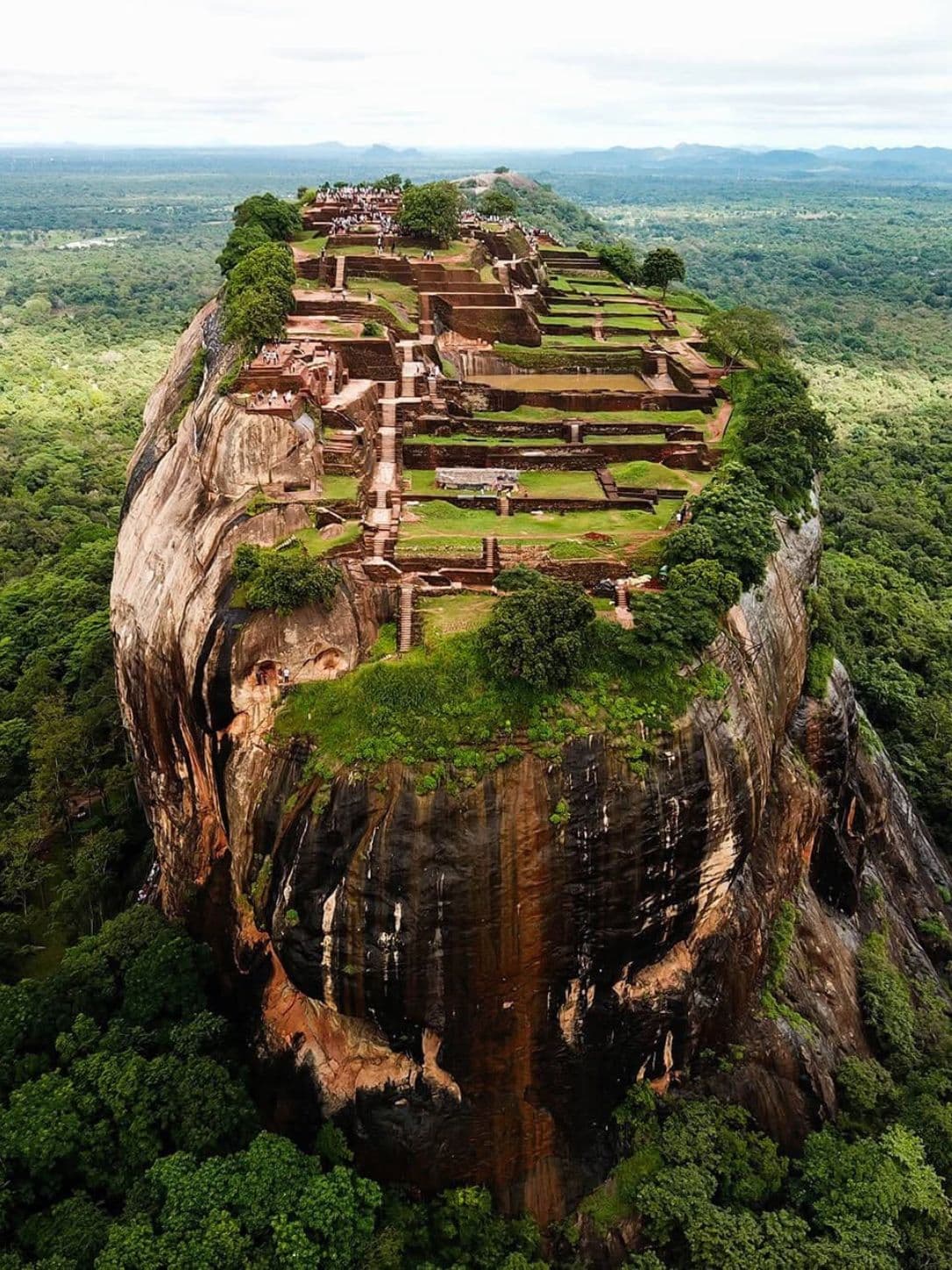
If you like history, this is the sort of place where details matter: the stone carving at Gal Vihara, the symmetry of the vatadage, the scale of the Royal Palace remains, and the sense that the whole site still has a clear layout. If you do not care about ruins at all, it will still be a worthwhile stop only if you are combining it with Sigiriya, Dambulla or a broader Cultural Triangle route. (ccf.gov.lk)
How long should you spend in Polonnaruwa?
For most travellers, six to eight hours is the sweet spot. That gives you enough time to enter at a sensible hour, visit the museum, move through the main archaeological groups, stop for lunch and finish without rushing. Some guides and tour operators describe it as a full-day visit, and that is the right expectation if you actually want to understand the site rather than skim it. (visitsrilanka.asia)
A shorter visit can work, but only if your route is tight and you are selective. If you are arriving from Sigiriya or Dambulla and then continuing elsewhere the same day, you should know that Polonnaruwa is the kind of site that rewards patience. It is not a place where you want to keep glancing at the clock. (srilanka.travel)
A simple way to think about it:
Polonnaruwa is best when you stop trying to “do it all” and start letting the site set the pace.
What are the main sights inside the ancient city?
The best-known stops are clustered enough to make a logical route, but there is still enough ground to cover that planning helps. The names matter less than the sequence: start with context, then move into the core monuments, then finish at the northern group where the strongest images tend to be. (ccf.gov.lk)
A sensible first-time route includes:
- The museum first, so you understand the site before walking it.
- The Sacred Quadrangle, where many of the most compact and photogenic monuments sit together.
- The Royal Palace and Audience Hall area, which help you read the city as a former capital.
- Gal Vihara, for the famous standing, seated and reclining Buddha images.
- Rankot Vihara and the wider monastic area, if you still have energy and daylight. (ccf.gov.lk)
The site is generally manageable because the internal roads are sealed and vehicles can be moved between clusters, which is useful if you are travelling with older relatives, children or anyone who does not want a long cycling day. At the same time, cycling is a strong option for travellers who want more freedom and do not mind the heat. (srilankataxilist.com)
The biggest mistake is to rush straight to the headline monuments and then leave. Polonnaruwa works best when you allow time for the less famous stops too. That is where the site starts to feel like a city rather than a list of ruins. (ccf.gov.lk)
Is it better to explore Polonnaruwa by bicycle or car?
For fit travellers in good weather, bicycle is usually the best way to experience Polonnaruwa. The site is relatively flat, and cycling gives you enough flexibility to drift between the different groups without constantly climbing in and out of a vehicle. Several travel sources that focus on the Cultural Triangle point out that the area is unusually easy to move around compared with hill-country destinations. (asiabylocals.com)
That said, cycling is not automatically the right choice for everyone. It is less appealing in strong sun, if you have limited mobility, or if you are travelling with children who tire quickly. In those cases, a car with a driver, or a tuk-tuk arranged for the site, is more sensible. The practical advantage is simple: you can cover the main clusters without wasting energy on the in-between distances. (mowando.com)
A good rule of thumb:
- 01Choose a bicycle if you want the most immersive and independent visit.
- 02Choose a car or driver if comfort, shade and pace matter more than the experience of moving through the site yourself.
- 03Choose a mixed approach if you want to cycle some sections and use transport for the longer links. (asiabylocals.com)
For most travellers, the mixed approach is the most honest answer. The site is large enough that a little help with movement improves the day, but small enough that you can still see a lot on your own. (polonnaruwa.heritage.site.sri.lanka.com)
tip Start with the museum Buy your ticket and begin at the museum, not at the farthest ruins. You will make better sense of the site if you see the context first, and you will also avoid wandering in the midday heat without a plan. The museum ticket counter is at the entrance to the museum, outside the main archaeological compound. (sltda.gov.lk)
When is the best time to go?
Polonnaruwa sits in Sri Lanka’s dry zone, so the most comfortable visits are usually in the drier part of the year rather than during heavy rain. The Cultural Triangle is commonly treated as a year-round inland route, but travellers generally enjoy it more when conditions are dry enough for walking, cycling and lingering outdoors. (en.wikipedia.org)
Within the day, the most sensible timing is simple: go early. Official attraction information lists the site hours as 6.30 am to 5.30 pm, which means you can start before the heat becomes oppressive and avoid the lazier part of the afternoon. Morning also gives you better light for the stonework and fewer people around the core monuments. (sltda.gov.lk)
If you are planning a larger Sri Lanka route, Polonnaruwa is especially good when combined with Sigiriya and Dambulla. Sri Lanka Tourism describes the Cultural Triangle as a compact area, and recent tourism work has continued to focus on improving visitor experience and site management there. (visitsrilanka.asia)
How do you fit Polonnaruwa into a Sri Lanka itinerary?
The simplest and most effective way is to base yourself around Sigiriya, Habarana or Dambulla and do Polonnaruwa as a day trip. The Cultural Triangle is compact enough that you can combine several major sites without spending the whole day in transit, and Sri Lanka Tourism notes that these bases sit within about an hour of Polonnaruwa and the other headline attractions in the area. (visitsrilanka.asia)
From Sigiriya, the drive to Polonnaruwa is commonly treated as around one hour to 1.5 hours, depending on traffic, road conditions and where you are starting from. That makes it realistic as a standalone day trip or as part of a wider heritage circuit. (srilanka.travel)
A sensible cultural loop looks like this:
- Day 1: arrive in Sigiriya or Dambulla.
- Day 2: visit Sigiriya early.
- Day 3: do Polonnaruwa as a slower heritage day.
- Day 4: add Dambulla, Minneriya, Kaudulla or move onwards to Kandy. (visitsrilanka.asia)
If you are short on time, Polonnaruwa is the site most likely to be cut, simply because it needs a proper half-day or more to feel worthwhile. But if you care about Sri Lanka’s historical backbone, it is often the site people remember most clearly after Sigiriya. (ccf.gov.lk)
What should you expect on the day itself?
Expect heat, space and a more reflective pace than at many other major sights. You are entering a religious and archaeological landscape, so dress modestly, keep noise down and treat the site as more than an open-air backdrop for photos. Official heritage guidance specifically reminds visitors to behave accordingly. (ccf.gov.lk)
You should also expect a site that is better organised than some travellers imagine. Visitor-management work has focused on better interpretation, clearer facilities and a more coherent experience at Polonnaruwa and similar heritage locations. That does not mean everything is perfect, but it does mean the experience is more straightforward than a lot of first-timers fear. (sltda.gov.lk)
A few practical points help:
- Bring water, sun protection and comfortable footwear.
- Start early if you want to walk rather than cycle in the heat.
- Do not assume you can “pop in” for half an hour and get the best of the site.
- Allow time for the museum, because it gives shape to the ruins. (sltda.gov.lk)
For travellers who like a more tailored route, Polonnaruwa also fits well into a private itinerary built around the Cultural Triangle, tea country or a wildlife extension. It works especially well when you are not trying to squeeze it between two long drive days. A good itinerary leaves room for the site to breathe.
Should you visit Polonnaruwa?
Yes, if you like history, archaeology or Sri Lanka’s cultural heartland. Polonnaruwa is not a place that rewards rushing, and it is not the most dramatic site in the country at first glance, but it is one of the most satisfying when you visit it properly. The compact, walkable layout, the quality of the stone monuments and the sense of a real ancient capital make it worth the time. (ccf.gov.lk)
If you are choosing between heritage stops, the honest answer is that Polonnaruwa belongs near the top of the list alongside Sigiriya and Dambulla. If you are building a route through Sri Lanka’s Cultural Triangle, it is one of the places that justifies slowing down rather than simply passing through. (visitsrilanka.asia)
For travellers who want a private, tailor-made Sri Lanka journey, Polonnaruwa can be woven into a route that balances heritage, wildlife and coast without forcing you into long, exhausting days. That is usually the best way to travel this part of the island: fewer stops, better pacing, and enough time to actually look.
Discussion
Your turn — been there, or heading there?
Questions
What people ask us
Most travellers need six to eight hours for a proper visit. That gives enough time for the museum, the main archaeological clusters and a lunch break without rushing. A shorter visit is possible, but it usually feels thin unless you are only stopping for a few headline sights.
Yes. Sigiriya and Polonnaruwa are very different experiences. Sigiriya is a single dramatic rock fortress; Polonnaruwa is a wider medieval city with palaces, shrines and sculpture spread across a larger site. If you like culture and history, they complement each other well.
Bicycle is usually the best option for fit travellers who want an immersive visit, because the site is flat and relatively easy to navigate. A car or driver is better if you want more comfort, shade, mobility support or a family-friendly pace.
Yes. It is commonly combined with Sigiriya or Dambulla because the Cultural Triangle is compact. From Sigiriya, the drive is generally around one to 1.5 hours depending on conditions, so a day trip is very practical if you start early.
Early morning is best. The site’s official hours are 6.30 am to 5.30 pm, and arriving early helps you avoid the strongest heat, the busiest hours and the harshest light. Morning also gives you better conditions for walking or cycling.
Journeys
Where this turns into a trip
Each is private and fully adjustable — a shape to start from rather than a package.
Places
Mentioned in this piece
Keep reading
More from the journal
Sri Lanka Travel Guide7 min read
Things to Do in Colombo in One Day
A practical Colombo guide for travellers with limited time: what to see, what to skip, how long to stay, and how to make the city work.
Sri Lanka Travel Guide7 min read
Sri Lanka 14 Day Itinerary: a route that actually works
A sensible two-week Sri Lanka route for first-time visitors: culture, tea country, safari and coast, with honest pacing and the stops worth keeping.
Beaches7 min read
Trincomalee in December: is it worth visiting?
A practical guide to east-coast weather, sea conditions, and what still works in Trincomalee in December — plus what to skip if you want a smooth trip.
When you are ready
Turn this into a journey.
Tell us roughly when you want to travel and what matters to you, and we will come back with a considered outline.