Sigiriya Rock Fortress: how to climb it well, what to look for, and the elephants around it
Sigiriya is worth every one of its 1,200 steps, if you start early and know what you are looking at. Here is the climb stage by stage, tickets and timing, Sigiriya or Pidurangala, and a word on the elephants of the Cultural Triangle after the loss of Kavantissa.
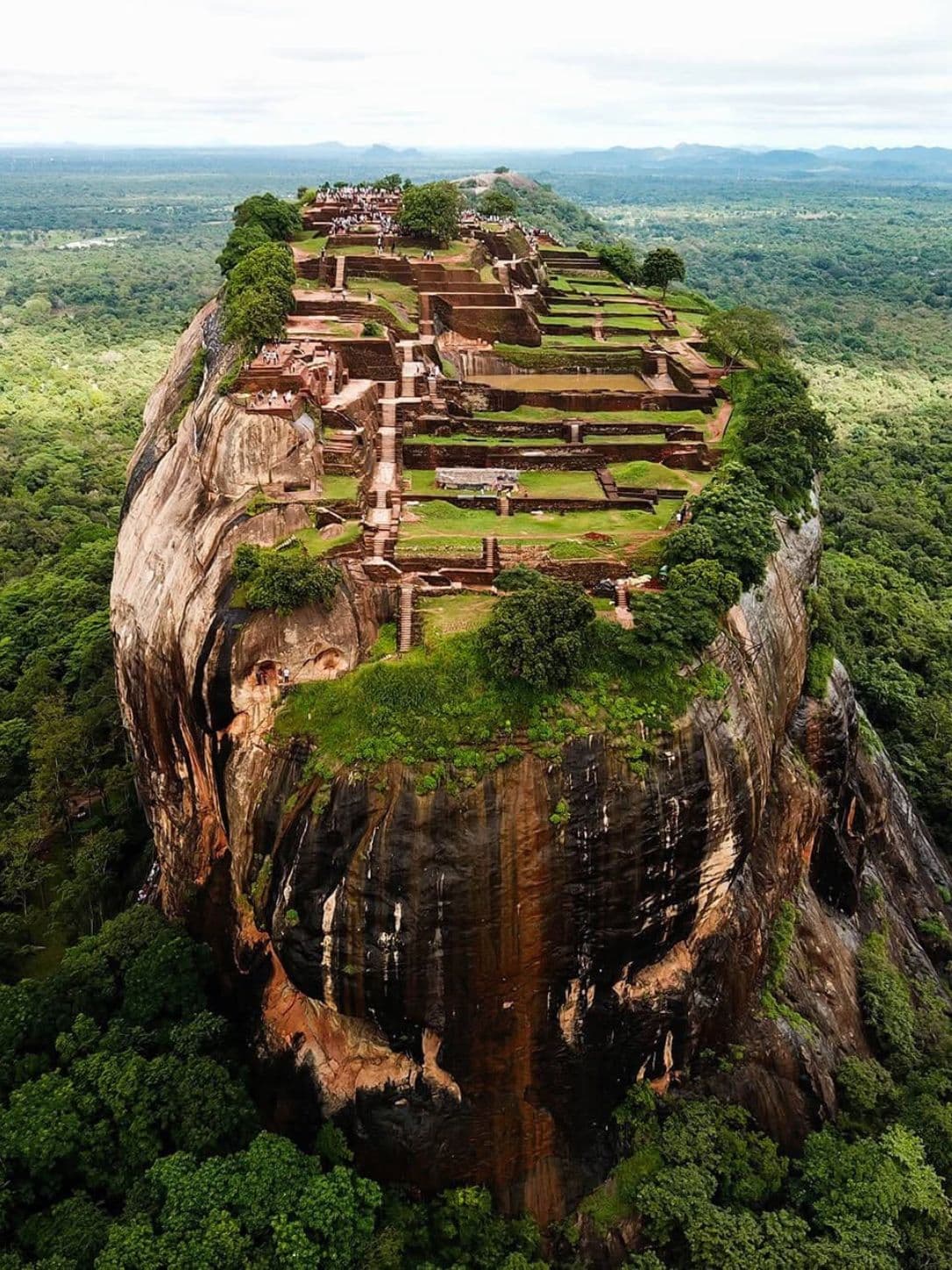
Sigiriya is a fifth-century royal citadel on a 180-metre granite rock, and one of the finest sights in Asia. Climb it as soon as the gates open, allow two to three hours, and buy the US$35 ticket, which includes the museum, online in advance. The climb is about 1,200 steps, steep but manageable.
Most people race to the summit for the photograph and miss the point. The genius of Sigiriya is the whole composition: water gardens, painted women, a lion's paws and a palace in the sky, built by a king in less than twenty years. Take it slowly, and it makes sense.
Is Sigiriya worth it?
Yes, and it is one of the few famous sights in Sri Lanka that is better than its photographs.
What Sigiriya does well
- The gardens. Some of the oldest landscaped gardens in Asia, with pools and fountains that still fill in the rain.
- The frescoes. Painted women in a sheltered pocket of the rock face, colours still vivid after fifteen centuries.
- The climb. A sequence of terraces and stairways designed for drama, ending on a summit the size of a small village.
- The view. Forest, reservoirs and the Knuckles on the horizon on a clear morning.
What it does not do well: midday heat, crowds after about 9am, visitors who struggle with heights or stairs, and quiet contemplation in high season.
A short history
According to the chronicles, King Kashyapa seized the throne in the late fifth century after the death of his father, and moved his capital to this rock for fear of his brother, the rightful heir. He built a palace on the summit and a city at its foot. His brother returned with an army, Kashyapa fell, and the rock was given back to Buddhist monks, who had lived in its caves before him.
The site was later abandoned to the forest, and rediscovered by the British in the nineteenth century. It became a UNESCO World Heritage Site in 1982.
The climb, stage by stage
- 01The water gardens. Symmetrical pools, channels and fountains leading straight towards the rock. Ten minutes, longer if you like a garden.
- 02The boulder gardens. Paths winding between giant boulders, with caves once used by monks. Look for the grooves cut into the rock for long-vanished walls.
- 03The spiral stair and the frescoes. A metal spiral staircase bolted to the rock face leads to the paintings of the "cloud maidens", women carrying flowers. Photography of the frescoes is not allowed.
- 04The Mirror Wall. A long gallery wall once polished to a shine, covered in verses left by visitors more than a thousand years ago. One of the oldest collections of graffiti anywhere.
- 05The Lion's Paw terrace. All that remains of a giant lion's head through which the final stair once passed: two enormous carved paws. Take a breather here.
- 06The summit. The foundations of the palace, cisterns cut into the rock and the view in every direction. Give it twenty minutes, and look down on the gardens to see the design.
Allow about an hour and a half for the climb and descent, and two to three hours with the museum and gardens.
A word on wasps: hornets nest on the rock face, and noise can disturb them. Keep your voice down on the upper stairs, and follow the guards' instructions if they close a section.
Sigiriya is not a climb with a view. It is a work of art you walk through, from the bottom up.
Tickets, hours and rules
- Tickets: US$35 for non-SAARC foreign adults and US$20 for SAARC nationals, including the Sigiriya Museum. Children pay less.
- Buy online: e-tickets from the Central Cultural Fund skip the morning queue at the ticket office.
- Hours: the site opens early, with sunrise visits possible, and ticket sales close at 5pm. Check the Central Cultural Fund's site for the current opening time.
- Guides: licensed guides are available at the official office by the car park. We think one is worth it, especially for the gardens.
- Drones: flying over Sigiriya needs approval from several government bodies, including the Civil Aviation Authority and the Ministry of Defence.
When to go
Time of day: at opening, and no later than about 8am. By 10am, the rock is hot, the stairs are crowded, and the queue at the spiral stair can be long.
Time of year:
- January to April: settled and dry; the best months, and the busiest.
- May to September: dry and very hot. August and September bring the elephant gathering at Minneriya, nearby.
- October to December: the inter-monsoon and the north-east monsoon bring afternoon storms. Mornings are usually clear.
Avoid public holidays if you can, when the site is crowded with families: the Sinhala and Tamil New Year in April and Vesak in May are the busiest.
Sigiriya or Pidurangala?
If you can only do one, do Sigiriya. If you have two mornings, climb Pidurangala at sunrise on one and Sigiriya at opening on the other.
The elephants of the Cultural Triangle, and the tusker we lost
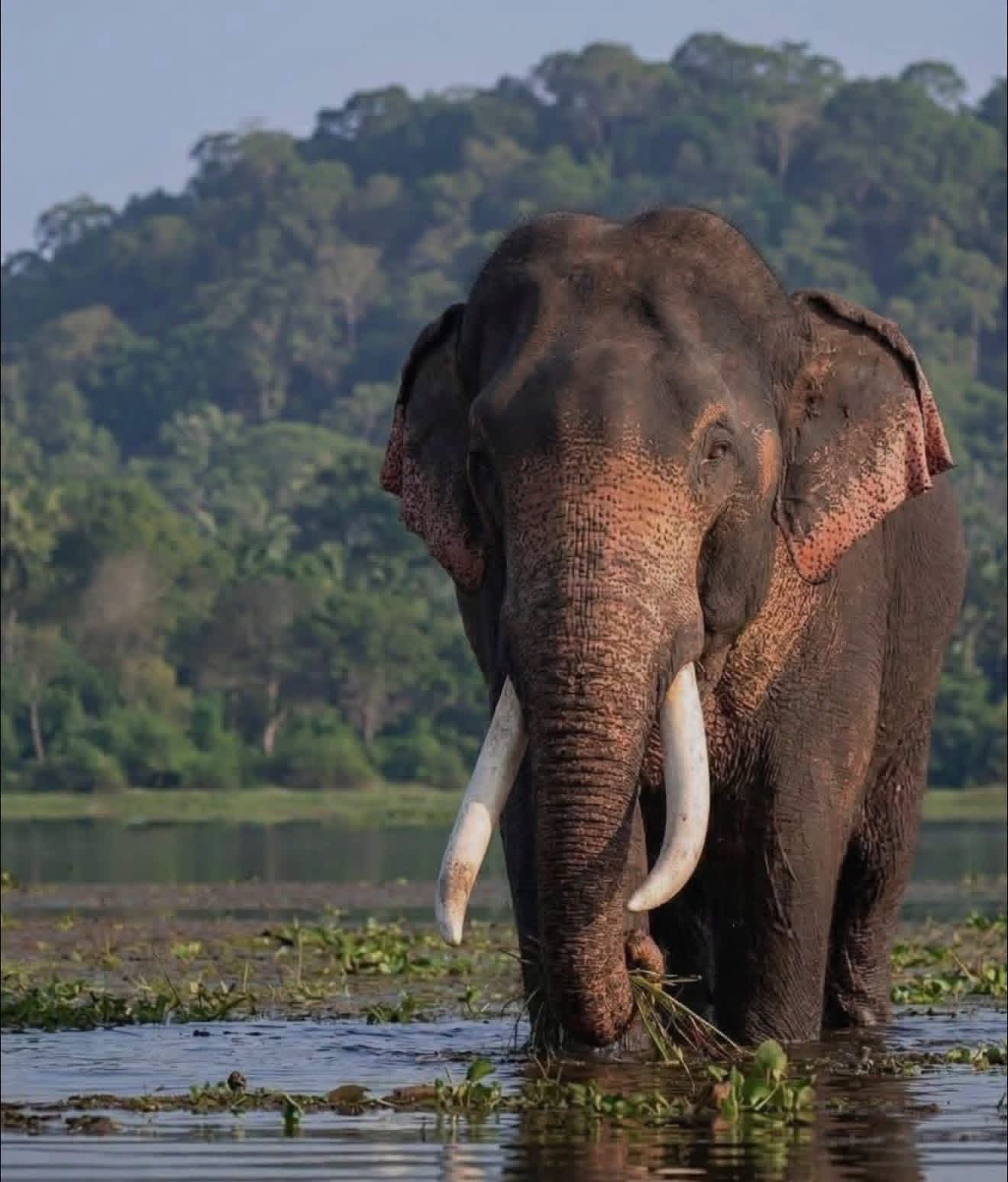
On 16 October 2026, Kavantissa, Sri Lanka's tallest living wild tusker, died in a paddy field near Siyambalangamuwa in Galgamuwa, a few weeks after he was found with a gunshot wound to his right foreleg. He stood around 11 feet tall, carried tusks more than six feet long, and was believed to be between 50 and 60 years old. He was named after the ancient king Kavan Tissa.
His home range ran through the farmland and forest west of the Cultural Triangle, around Galgamuwa, Maho, Eppawala and Ambanpola. His old migratory route, from the great reservoirs at Kala Wewa and Balalu Wewa through Galgamuwa towards Wilpattu, had already been cut off by farming and settlement.
An expert committee appointed by the President is investigating his death, and police have arrested a suspect and recovered two firearms. The investigation is ongoing, and we will not add to it here.
Kavantissa's death is part of a bigger story. Human-elephant conflict kills hundreds of elephants a year in Sri Lanka, and tuskers are rare: only around 120 were counted in the last full census, in 2011. The Cultural Triangle is one of the best places in the world to see wild elephants, and one of the places where that conflict is most acute.
If you come to see elephants, here is how to do it well:
- See them in the parks. Minneriya, Kaudulla and Hurulu Eco Park, with a naturalist who keeps a respectful distance.
- Do not feed elephants by the roadside; it draws them onto roads and into conflict.
- Skip elephant rides, which are still offered around Sigiriya and Habarana. We do not book them.
- Do not drive after dark on rural roads in elephant country.
- Choose operators who respect the parks' rules on jeep numbers and distance.
Where to stay and how to get there
Stay as close to the rock as you can. Sigiriya itself is best for the earliest start, Dambulla for the cave temples and better road links, and Habarana for the elephant parks.
From the airport, Sigiriya is about four hours by road, or about 35 minutes on Cinnamon Air; we compare the options in Colombo to Sigiriya.
Dates worth knowing
- Tuesday 24 November 2026: Il Full Moon Poya, a public holiday.
- Wednesday 23 December: Unduvap Full Moon Poya, at the start of the Christmas peak.
- From around 20 December to New Year: the busiest weeks of the year at Sigiriya.
- 13 and 14 April 2027: the Sinhala and Tamil New Year, with large crowds of local visitors.
- August and September 2027: the elephant gathering at Minneriya and Kaudulla, usually at its peak.
A Cultural Triangle plan
- 01Day 1: arrival. Drive straight from the airport, about four hours, and rest.
- 02Day 2: Sigiriya at opening. The museum afterwards, a long lunch, and an afternoon elephant drive at Minneriya, Kaudulla or Hurulu.
- 03Day 3: Polonnaruwa, the medieval capital, by bicycle in the early morning.
- 04Day 4: Dambulla's cave temples, on the way south to Kandy.
This is how our Ceylon Icons journey begins, and our wildlife trips are built around the parks nearby. It is also how we plan at Siri Siri Lanka Traveller, which Mahinsa founded to pair the privacy and comfort of a private journey with real time to slow down: three nights here, not one, so the rock is climbed at dawn and the elephants are seen properly. The full route is in Sri Lanka in 10 days.
What to book first
- 01A hotel near the rock, for at least two nights.
- 02Your Sigiriya ticket online, for the first morning.
- 03A licensed guide at the site, or a naturalist for the elephant parks.
- 04A car and driver from the airport.
Who Sigiriya suits
- First-time visitors, for whom it is a highlight of the island.
- Families with children over about eight, who are strong walkers.
- History lovers, who should add a guide and the museum.
Less suited: anyone with a serious fear of heights, which the spiral stair and upper sections test, or travellers who cannot manage an early start.
If Sigiriya is on your route, tell us your dates. We will put you at the gate when it opens, book a good guide, and plan the elephants with the care they deserve. Plan my Sri Lanka trip.
Last checked 23 October 2026.
Author @Mahinsa Hennakgedara
Discussion
Your turn — been there, or heading there?
Questions
What people ask us
About an hour and a half to climb and come down at a steady pace, and two to three hours in all with the water gardens and the museum. The climb is about 1,200 steps, so start at opening time, before the heat and the crowds.
US$35 for non-SAARC foreign adults and US$20 for SAARC nationals, including entry to the Sigiriya Museum, as of 2026. Children pay less. Tickets can be bought online from the Central Cultural Fund, which avoids the morning queue at the ticket office.
The site opens early in the morning, with sunrise visits possible, and ticket sales close at 5pm. Opening times have changed in recent years, so check the Central Cultural Fund's website before you go, and aim to be at the gate when it opens.
If you can only do one, climb Sigiriya, for the gardens, the frescoes and the summit palace. Pidurangala, next door, has the best view of Sigiriya itself and is popular at sunrise, but its final section is a rough scramble over boulders.
Yes. Minneriya, Kaudulla and Hurulu Eco Park are all close to Sigiriya, with the largest gatherings in August and September. Go with a naturalist who keeps a respectful distance, never feed elephants by the roadside, and avoid elephant rides.
Journeys
Where this turns into a trip
Each is private and fully adjustable — a shape to start from rather than a package.
Places
Mentioned in this piece
Keep reading
More from the journal
Sri Lanka Travel Guide7 min read
Sri Lanka 14 Day Itinerary: a route that actually works
A sensible two-week Sri Lanka route for first-time visitors: culture, tea country, safari and coast, with honest pacing and the stops worth keeping.
Wildlife6 min read
Wilpattu National Park: how to visit it well
A practical guide to Sri Lanka’s quieter leopard park: when to go, which gate to use, what time to leave, and how to make the safari worthwhile.
Sri Lanka Travel Guide7 min read
Galle Fort travel guide: what to do and how long to stay
A practical guide to Sri Lanka’s best-known fort town: what is worth your time, how long to stay, and when Galle works best in a route.
When you are ready
Turn this into a journey.
Tell us roughly when you want to travel and what matters to you, and we will come back with a considered outline.