Tea Country
Nuwara Eliya
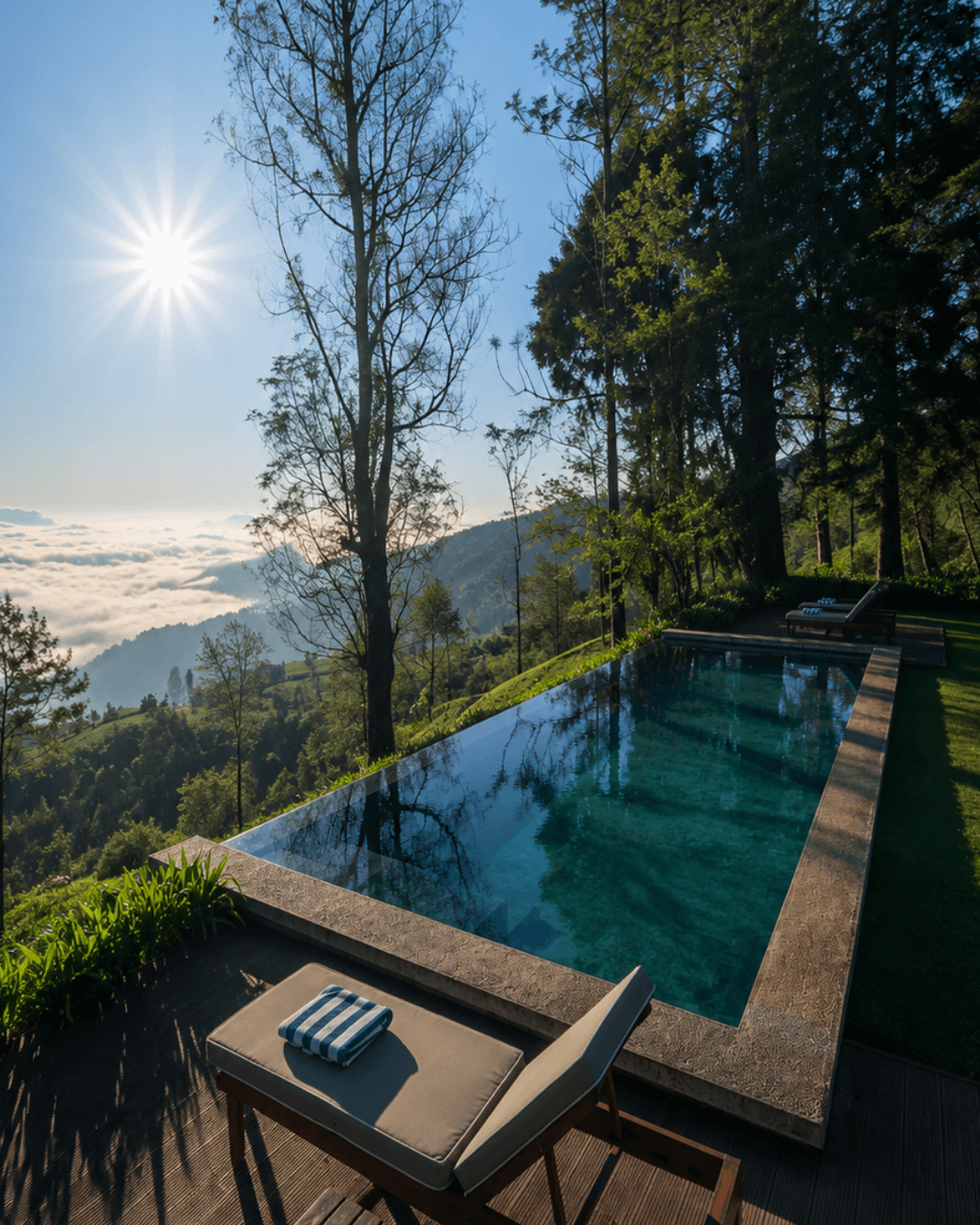
A colonial hill station at nineteen hundred metres, where the tea starts and the nights are genuinely cold.
- 1 to 2 nights
- Best January to April, and July to September
The British found this basin in 1819, decided it reminded them of home, and proceeded to build the least tropical town in South Asia: a golf course, a racecourse, a boating lake, mock-Tudor bungalows and a post office with a clock tower. They called it Little England without irony, and the name has stuck for two centuries because it is difficult to improve on.
The reason it exists is tea. Above about twelve hundred metres the leaf grows slowly, and slow growth is what produces the high-grown Ceylon tea that made the island famous. The estates around Nuwara Eliya are still working, still picked by hand, and still worked overwhelmingly by the descendants of Tamil labourers brought from southern India in the nineteenth century — a history that the more thoughtful estate tours will tell you about honestly.
At this altitude the temperature drops to single figures overnight and the older hotels have fireplaces for a reason. Visitors who have packed only for a tropical island are reliably caught out.
Why come here
What Nuwara Eliya is for
- 01
The tea, at its source
Walking a working estate, seeing the plucking, then the withering lofts and the rollers, and tasting the result an hour later is one of the few industrial processes anywhere that is genuinely pleasant to watch.
- 02
Horton Plains
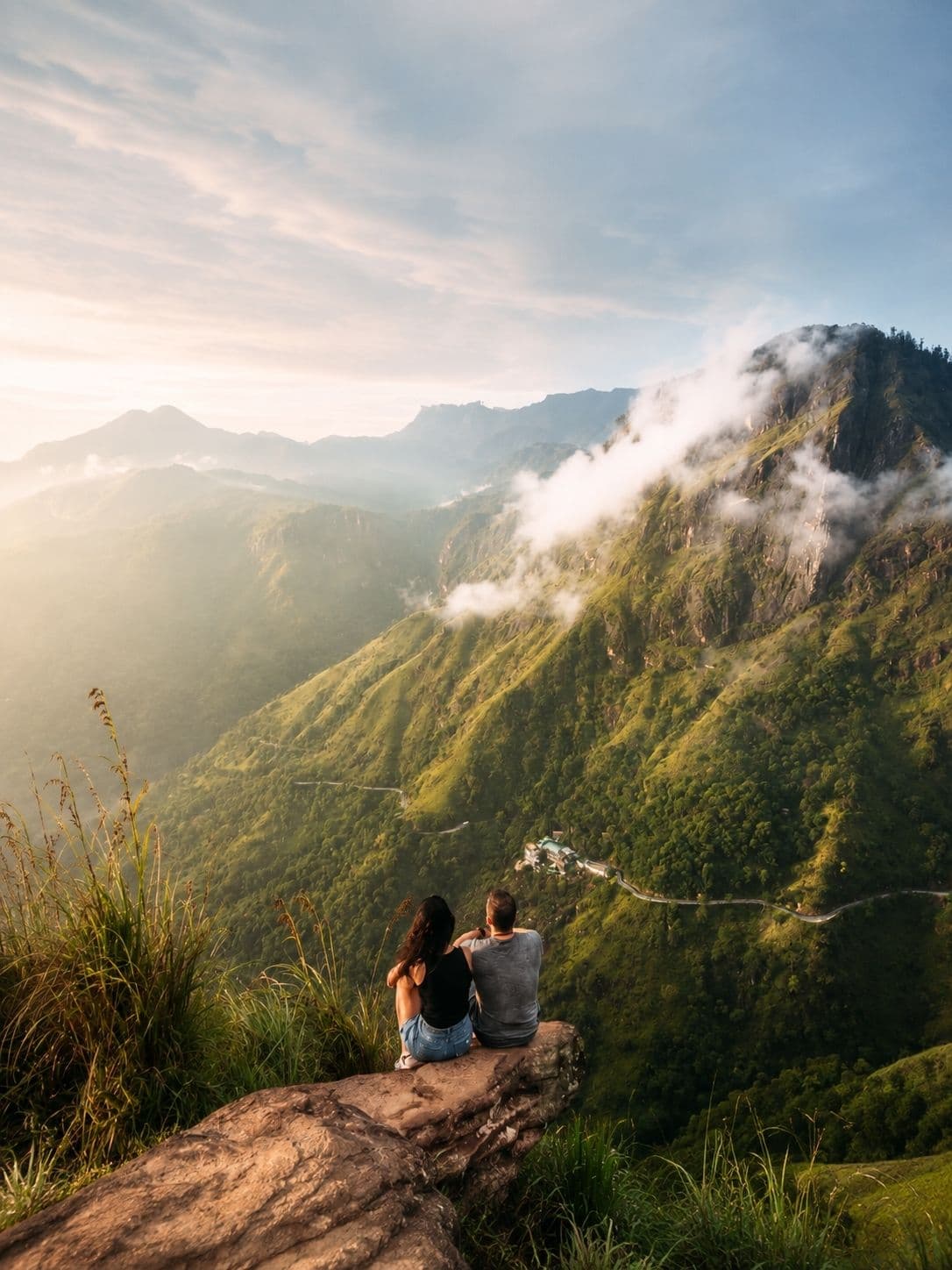
A high plateau of montane grassland an hour away, ending in a cliff that drops eight hundred and eighty metres. Nothing else in Sri Lanka looks remotely like it.
- 03
The strangeness
A hill station preserved past the point of parody, in the middle of a tropical island. It is peculiar, and the peculiarity is the point.
One caveat
The town itself is scruffy, congested and much less charming than the estates around it. People who base themselves in the centre are often underwhelmed; people who stay on a tea estate ten minutes out rarely are.
Top experiences
What we would actually do
Not a list of everything possible — the handful of things we put into itineraries, and when.
World's End at dawn
Horton Plains has to be walked early — by ten the cloud has come up the escarpment and the view is gone. That means leaving around half past five in the cold and dark, and it is worth every minute of it.
A working estate and factory
Pedro and Mackwoods are the accessible ones. The better experience is a private walk through the fields with a manager who can explain why two leaves and a bud, and why altitude changes everything.
The train down to Ella
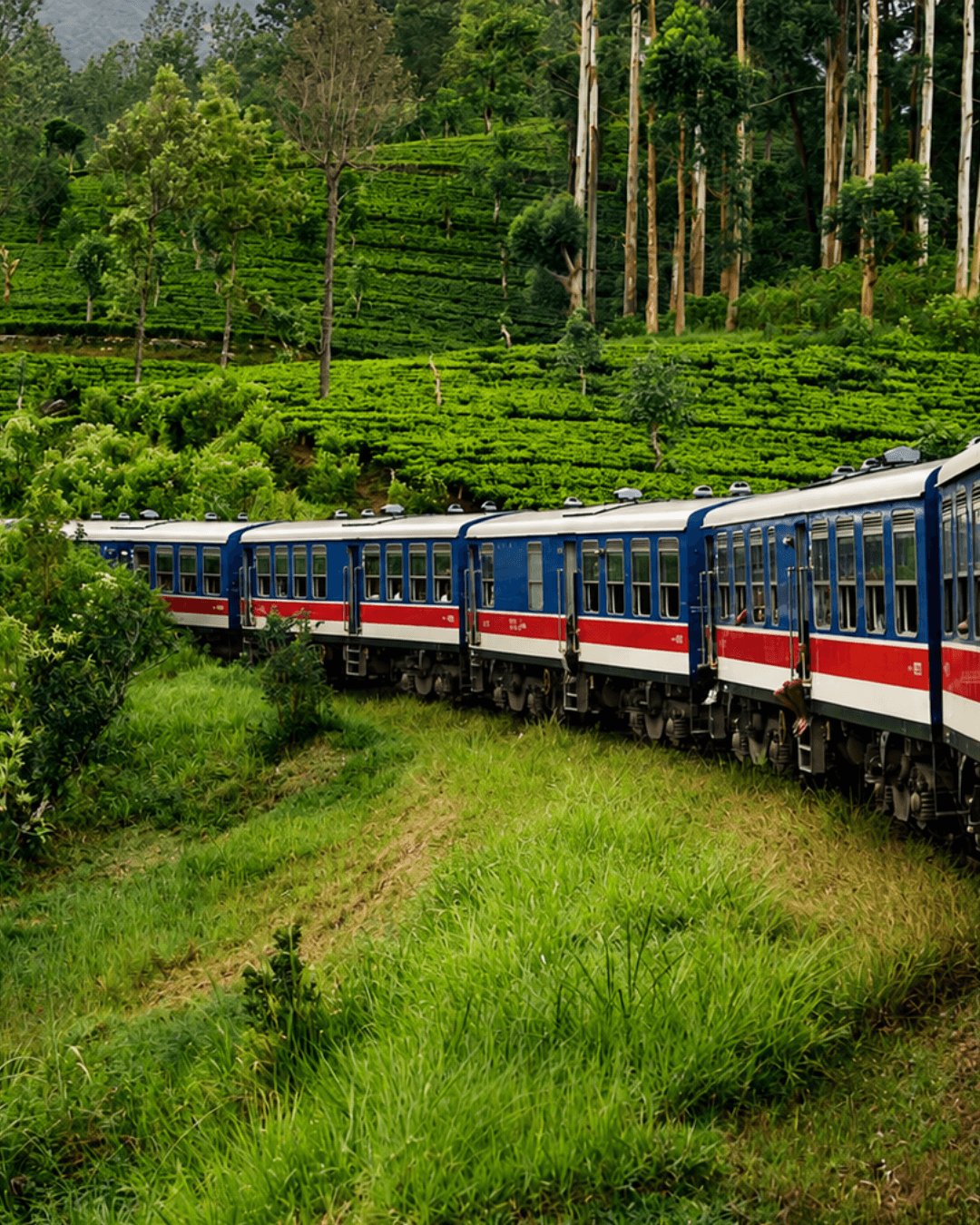
The stretch from Nanu Oya through Haputale to Ella is the most beautiful section of railway in the country, and much the most comfortable way to make the journey.
Highlights
The things themselves
Horton Plains National Park
World's End, Baker's Falls, and montane cloud forest full of endemics.
Gregory Lake
Built by a colonial governor, now the town park. Pleasant at dusk, crowded at weekends.
Victoria Park
Small, well kept, and genuinely good for birdwatchers — the whistling thrush is the prize.
The Grand Hotel and Hill Club
Colonial relics still operating. The Hill Club still expects a jacket at dinner.
Pedro Tea Estate
The closest working estate to town, and the easiest factory to visit.
Working out how many nights Nuwara Eliya is worth?
It is the question we answer most often, and the honest answer changes with what else is on your route. Tell us where else you are going and we will tell you how long to stay here.
Travel information
The practical part
- Suggested duration
1 to 2 nights
One night is enough if you are passing through to Ella. Two if you want Horton Plains, which needs a whole early morning to itself.
- Best time to visit
January to April, and July to September
April is the local season, when Colombo empties into the hills for the new year — the town is at its liveliest and its most expensive. Clear mornings are commonest between January and March.
When not to come. October to December brings persistent cloud, which matters because the entire point of Horton Plains is a view.
Travel tips
- 01
Pack genuinely warm clothing. It regularly drops to five degrees overnight and most hotels have no heating beyond a fire.
- 02
Horton Plains requires an early start — leave by half past five to reach the escarpment before the cloud does.
- 03
Stay on an estate rather than in the town centre if you have the choice.
- 04
The Nanu Oya railway station, not Nuwara Eliya, is where the trains stop. It is about half an hour from town.
Recommended journeys
Itineraries that include Nuwara Eliya
Each is private and fully adjustable — a shape to start from rather than a package to buy.
Nearby
What pairs with it
Sri Lanka is small, and the best itineraries cluster rather than criss-cross. These are the natural neighbours.
Questions
About Nuwara Eliya
If the weather is clear, yes — it is the most unusual landscape on the island. If it is socked in, it is a nine-kilometre walk in cloud. We watch the forecast and will tell you honestly the evening before.
Five to ten degrees overnight in the coldest months, occasionally lower on the plains. Daytime is pleasant, around eighteen to twenty. It is the only part of Sri Lanka where you will want a jumper.
Keep reading
More on Nuwara Eliya
Longer pieces from the journal, and the wider trips this place belongs to.
Start planning
Build a journey around Nuwara Eliya.
Tell us when you are thinking of travelling and we will tell you honestly whether Nuwara Eliya is right for those months — and what to pair it with.