The Knuckles Range: a guide to Sri Lanka's quietest mountains, and how to walk them
The Knuckles is the wildest corner of the hill country: 34 peaks, cloud forest and villages at the end of the road, under three hours from Kandy. It rewards an early start, a good guide and the right month.
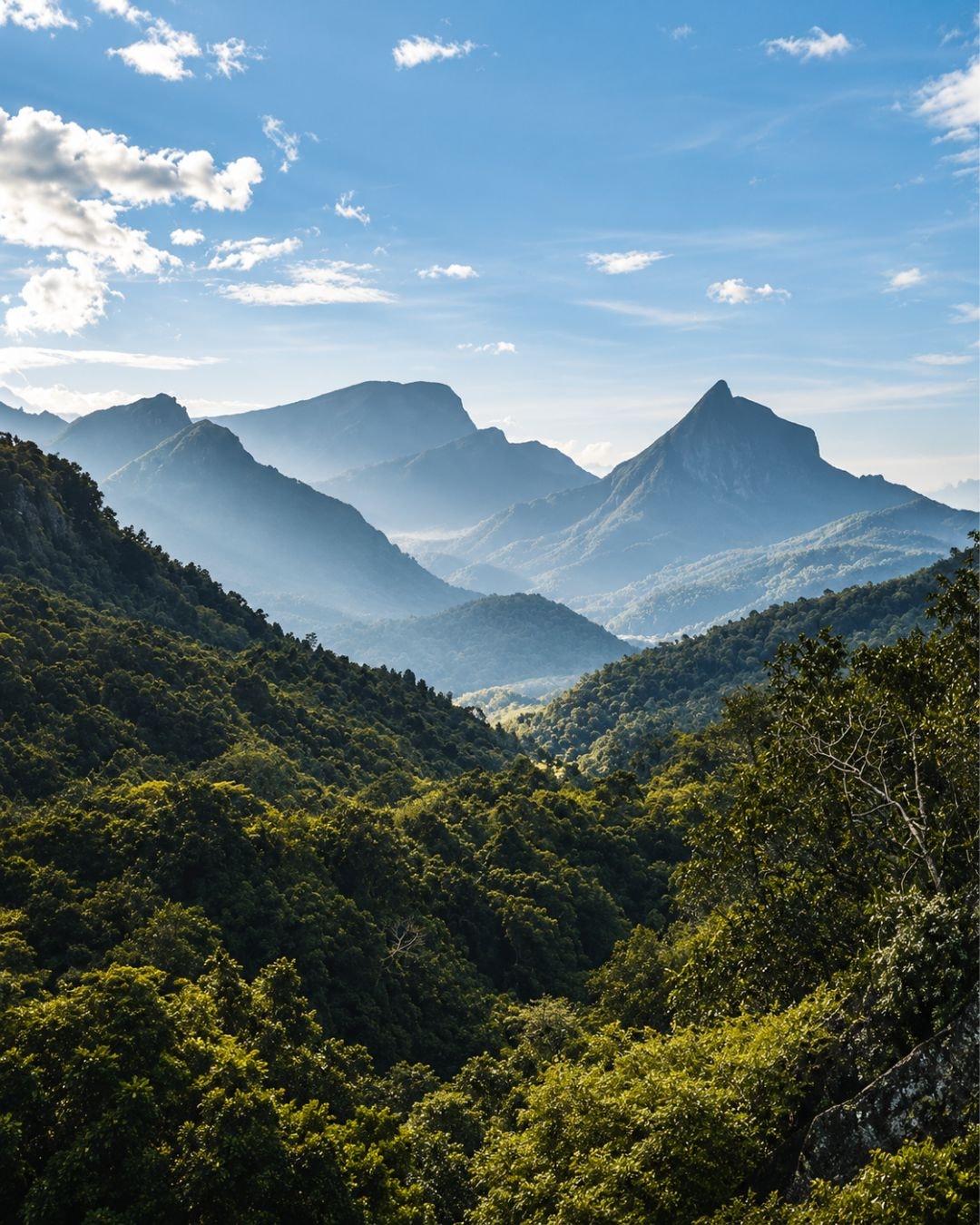
The Knuckles Range is a UNESCO-listed block of mountains, cloud forest and villages about one and a half to two and a half hours east of Kandy. Go between January and April, start early with a local guide, and give it at least one night. It is for walkers, not a viewpoint stop.
Most visitors to the hill country never come here, which is a large part of its appeal. There is no train, no town, very little mobile signal and not much in the way of facilities, and that is exactly why a day in the Knuckles feels unlike anywhere else on the island.
What the Knuckles is
The range rises between Kandy and Matale, on the north-eastern edge of the central hills. Since 2010, the Knuckles Conservation Forest has been part of the Central Highlands of Sri Lanka World Heritage Site, alongside Horton Plains and the Peak Wilderness around Adam's Peak.
The name is British. Early surveyors thought a line of folded peaks on the western side, seen from Kandy, looked like the knuckles of a clenched fist. Sinhala speakers have long called it Dumbara Kanduvetiya, the mist-laden mountains, which is the more accurate description.
There are 34 peaks, from about 900 metres to just over 1,900, and almost every kind of Sri Lankan climate within a few hours' walk: dry-zone scrub on the lower eastern slopes, montane grassland, tea, and stunted, moss-hung cloud forest on the ridges. Purple-faced langurs, sambar deer and a long list of endemic birds and plants live here, and a few remote farming villages still sit deep inside it.
Is it worth it?
Yes, if you want a real mountain day rather than another viewpoint.
What the Knuckles does well
- Walking. Proper trails through cloud forest, grassland and paddy, with very few other walkers.
- Villages. Places like Meemure, at the end of a long, rough road, where daily life still runs on paddy and river.
- Quiet. No crowds, no tuk-tuk queues and almost no signal.
- Nature. Some of the richest forest in the country, with birds and plants found nowhere else.
What it does not do well: guaranteed views, comfortable roads, easy half-days, and walking in the wet season, when leeches and earth slips take over.
When to go
The Knuckles sits on the north-eastern edge of the hills, which means it catches rain from both monsoons and the inter-monsoon storms between them. The range also makes its own weather: cloud can roll over a ridge at ten in the morning on an otherwise clear day.
- January to April: our first choice. The north-east monsoon fades, the trails dry out and the mornings are clearest.
- May to August: often workable, especially on the eastern and northern sides, which sit in the shelter of the south-west monsoon. Expect wind and cloud on the ridges.
- September to December: the wettest months here, from the inter-monsoon into the north-east monsoon, which hits this side of the hills first. Leeches, swollen streams and slips make most longer walks a poor idea.
Whatever the month, start early. The best light, the clearest views and the driest trails come before mid-morning. We explain the seasons in more detail in Sri Lanka's second inter-monsoon and Sri Lanka's north-east monsoon.
In the Knuckles, the weather decides the walk. Our job is to choose the side, the start time and the month that give it the best chance.
The two sides, and how to reach them
The range is big enough that the side you enter from shapes the whole day.
The eastern side, via Hunnasgiriya. The road climbs east from Kandy towards Mahiyanganaya, then turns off at Hunnasgiriya into the range. Along it lie the Forest Department's conservation centre at Deanston, the ticket counter at Thangappuwa, the saddle at Corbet's Gap, about 19 kilometres from the Hunnasgiriya junction, and, at the end of the road, Meemure. Allow one and a half to two and a half hours from Kandy.
The northern and western side, via Matale. From Matale, roads climb through Rattota to Riverston and the Pitawala grasslands, and from Wattegama through Bambarella and Panwilla. This side is the natural approach from Sigiriya and the Cultural Triangle, and has some of the easier walks.
Walks worth doing
- Mini World's End, from Deanston. A round trip of about three kilometres on a single path, ending at a sheer drop with the southern range laid out below. The easiest good walk in the Knuckles.
- Corbet's Gap. A wind-blown saddle with views over the forest towards Meemure. You can drive to it, but the better way is on foot along the old forest road from Thangappuwa, once used to carry tea and now open to walkers with a permit.
- Meemure. One of the most remote villages in the country, reached by a long, slow road. Stay a night, bathe in the river, and walk out through the paddy in the morning.
- Bambarella to Thangappuwa. The classic long traverse, seven to eight hours over the ridges. Only with a guide, and only in dry weather.
- Riverston and Pitawala. Shorter walks on the northern side, across open grassland and past waterfalls.
- Dothalugala, Nitro Cave and Kalupahana. Longer, more demanding routes into the forest, best with an overnight stay and an experienced guide.
Permits, guides and rules
The Knuckles is a conservation forest managed by the Department of Forest Conservation, not an open hillside. Entry tickets are sold at its checkpoints, including Deanston and Thangappuwa, and overnight camping needs a separate permit arranged in advance.
We would not walk the longer routes without a registered local guide, and on many of them you will be expected to have one. The trails are faint in places, the cloud can close in quickly and there is often no signal to call for help. A good guide also knows which streams are rising and which villages to stop in.
No fires, no music, no litter left behind, and no plants or stones taken away.
What to bring
- Proper walking shoes with grip, and long socks you can tuck your trousers into.
- Leech protection. Leech socks, or tobacco or salt rubbed onto socks as the guides do. Seal your shoes in plastic bags when you leave.
- A light rain jacket and a warm layer, even in the dry season.
- Water, snacks and cash, since shops are few and far between.
- A dry bag for your phone and camera.
Where to stay
For a single day, Kandy is the obvious base, with the widest choice of hotels and an early start. To see the range properly, stay a night or two on its edges, in one of the small lodges and homestays near Deanston, Rangala, Riverston or in Meemure itself. Expect simple rooms, home cooking and very early nights; the point is to be on the trail when the light comes up.
How the Knuckles fits a route
The range sits between the Cultural Triangle and Kandy, which makes it an easy addition to a classic route rather than a detour.
- 01Nights 1 to 3: the Cultural Triangle. Sigiriya, Dambulla and Polonnaruwa.
- 02Nights 4 and 5: the Knuckles. Enter from the north through Matale and Riverston, walk for two days, and leave by the eastern side.
- 03Night 6: Kandy. The lake and the Temple of the Tooth, an hour or two down the road.
- 04Nights 7 and 8: tea country. On to Nuwara Eliya and the train from Nanu Oya to Ella.
For travellers who want time and quiet over sights, this is the kind of stop our Ceylon Soul journey is built around: fewer places, longer in each. The rest of the route, from the airport inland, is in Colombo to Kandy and Sri Lanka in 10 days.
Who the Knuckles suits
- Walkers who want real trails and very few people.
- Birdwatchers and naturalists, for the cloud forest and its endemic species.
- Repeat visitors looking for a side of the island most people never see.
- Slow travellers happy with simple rooms and early nights.
Less suited: anyone after an easy half-day from Kandy, travellers with limited mobility, young children on the longer routes, and visits between September and December.
If the Knuckles is on your list, tell us your dates and how far you like to walk. We will pick the side and the trail for the season, find the guide, and keep a spare morning in case the mist decides otherwise. Plan my Sri Lanka trip.
Last checked 19 October 2026.
Author @Mahinsa Hennakgedara
Discussion
Your turn — been there, or heading there?
Questions
What people ask us
The Knuckles Range lies in central Sri Lanka, between Kandy and Matale, on the north-eastern edge of the hill country. Most trailheads are one and a half to two and a half hours from Kandy by road, either through Hunnasgiriya on the eastern side or through Matale and Rattota on the northern side.
January to April, when the trails are driest and the mornings clearest. May to August can also work, especially on the eastern and northern sides. September to December are the wettest months, with leeches, swollen streams and a higher risk of earth slips.
Entry tickets are sold at the Forest Department's checkpoints, including Deanston and Thangappuwa, and camping needs a separate permit arranged in advance. A registered local guide is expected on many of the longer routes, and we would always use one, because trails are faint and the mist closes in quickly.
Yes, for a shorter walk such as Mini World's End from Deanston or the walk to Corbet's Gap. Leave Kandy very early, as the best light is before mid-morning. For longer routes or a night in a village like Meemure, stay on the edge of the range.
Not usually. October and November are among the wettest months in the Knuckles, with afternoon storms, leeches and earth slips that can close roads and trails. If your trip falls then, keep to short walks on a dry morning and have another plan ready.
Journeys
Where this turns into a trip
Each is private and fully adjustable — a shape to start from rather than a package.
Places
Mentioned in this piece
Keep reading
More from the journal
Sri Lanka Travel Guide7 min read
Sri Lanka 14 Day Itinerary: a route that actually works
A sensible two-week Sri Lanka route for first-time visitors: culture, tea country, safari and coast, with honest pacing and the stops worth keeping.
Beaches7 min read
Trincomalee in December: is it worth visiting?
A practical guide to east-coast weather, sea conditions, and what still works in Trincomalee in December — plus what to skip if you want a smooth trip.
Wildlife6 min read
Wilpattu National Park: how to visit it well
A practical guide to Sri Lanka’s quieter leopard park: when to go, which gate to use, what time to leave, and how to make the safari worthwhile.
When you are ready
Turn this into a journey.
Tell us roughly when you want to travel and what matters to you, and we will come back with a considered outline.