Adam's Peak season 2026–27: when to climb, which route, and which nights to avoid
The pilgrim season on Sri Pada runs from 23 December 2026 to Vesak in May 2027. Here is the night climb hour by hour, the three routes, the Poya nights when the queues last for hours, and when to leave the mountain for another trip.
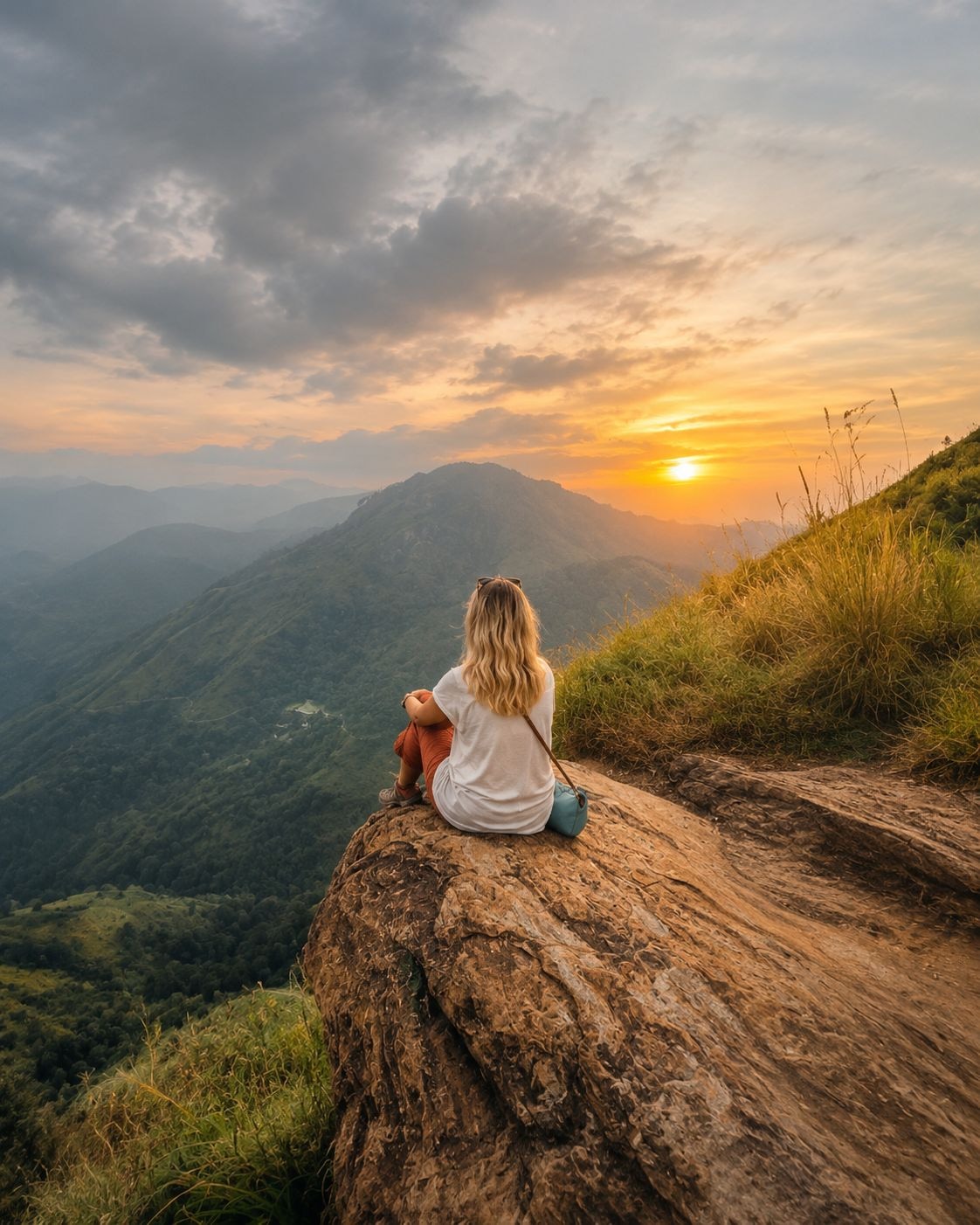
Adam's Peak season runs from the Unduvap full moon on 23 December 2026 to Vesak on 19 May 2027. Climb from Nallathanni on the Hatton side, start around 2am on a weekday, and avoid Poya nights and holiday weekends, when the queues near the top can last hours. January to March brings the clearest dawns.
Most people treat Sri Pada as a hike with a sunrise. It is a pilgrimage first: a mountain sacred to four faiths, climbed by huge numbers of people every season, many of them elderly pilgrims in white. Go in that spirit, and it is one of the great nights of any trip to Sri Lanka.
Is Adam's Peak worth climbing?
Yes, if you are ready for a night without sleep and several thousand steps.
What Adam's Peak does well
- The pilgrimage. Buddhists honour the footprint at the summit as the Buddha's, Hindus as Shiva's, and Muslims and Christians as Adam's. The night is full of bells, chanting and pilgrims of every age.
- The dawn. On a clear morning, the peak casts a perfect triangle of shadow across the hills to the west at sunrise.
- The path. Lit all the way in season, with tea stalls every few hundred steps.
- The hill country, spread below you as the light comes up.
What it does not do well: solitude, sleep, bad knees on the descent, and Poya nights, when the summit is packed.
The 2026–27 season
The pilgrim season begins each year on the Unduvap full moon in December, when an image of the god Saman is carried in procession to the summit, and ends on the Vesak full moon in May. For 2026–27, that means:
- Opening: Wednesday 23 December 2026, Unduvap Full Moon Poya.
- Closing: Wednesday 19 May 2027, Vesak Full Moon Poya.
Last season was a reminder that the mountain sets its own terms. The 2025–26 season opened on 4 December 2025, just after Cyclone Ditwah, and access by the Hatton road was restricted for a time after a landslide at Mahagiridamba, until repairs were made. The season ended on 30 May 2026.
Which nights to choose
The busiest nights are the full moons and long weekends, when the queue for the summit can stretch hundreds of steps down the mountain. The quietest are weekday nights away from them.
- Wednesday 23 December 2026: the opening night. Huge crowds and processions.
- Christmas to New Year: busy, especially at weekends.
- Friday 22 January 2027: Duruthu Full Moon Poya.
- Saturday 20 February: Navam Full Moon Poya.
- Monday 22 March: Medin Full Moon Poya, traditionally the high point of the season.
- 13 and 14 April: the Sinhala and Tamil New Year, with large family crowds.
- Tuesday 20 April: Bak Full Moon Poya.
- Wednesday 19 May: Vesak, the last night of the season.
Our choice: a weekday night in late January, February or early March, away from the Poya dates. The dawns are clearest then, and the queues are bearable.
The three routes
The Hatton route is the one we use. It is the best lit, the best served by tea stalls, and the only one that fits a single night between two hotels.
The night, hour by hour
- 01Evening. Arrive at Nallathanni or a tea estate nearby, eat early and sleep for a few hours.
- 02About 1.30 to 2am. Start walking. The first hour is gentle, through the village and past the Peace Pagoda; the steps begin in earnest after that.
- 032 to 5am. The climb, three to four hours for most people, with tea stops on the way. The last section is steep and narrow.
- 04About 5.30am. The summit, where you may queue to reach the shrine. Find a spot facing east and wait in the cold.
- 05Around 6.30am. Sunrise, and, if the sky is clear, the shadow of the peak to the west.
- 06About 7am. The descent, two to three hours, and harder on the legs than the climb.
- 07Mid-morning. Breakfast, a hot shower and sleep.
Adam's Peak is not climbed for the view. It is climbed for the night, and the view is the reward.
What to bring
- Warm layers. The summit is very cold before dawn, even when the base is mild. A fleece, a hat and gloves.
- A rain jacket, in any month.
- A head torch, for the stretches between lights and for the descent if you start late.
- Water and a little cash for tea and food on the way.
- Proper walking shoes, not sandals.
- Respectful clothing for the summit shrine, where shoes are removed.
Alcohol, tobacco and other intoxicants are banned on the pilgrim routes, and police check for them. Litter, and especially polythene, must not be left on the path or at the summit.
Outside the season
Out of season, from late May to December, the lights are off, the stalls are closed, and the south-west monsoon brings heavy rain, strong winds and leeches. Since July 2026, off-season access has been limited to two routes, with a pass required, and other traditional paths are closed.
People do climb out of season, but we don't recommend it. Without the lights, the stalls and the other pilgrims, it is a wet, lonely and genuinely risky night.
Where to stay
Nallathanni, at the foot of the Hatton route, has simple guesthouses within walking distance of the start, which means the most sleep before the climb.
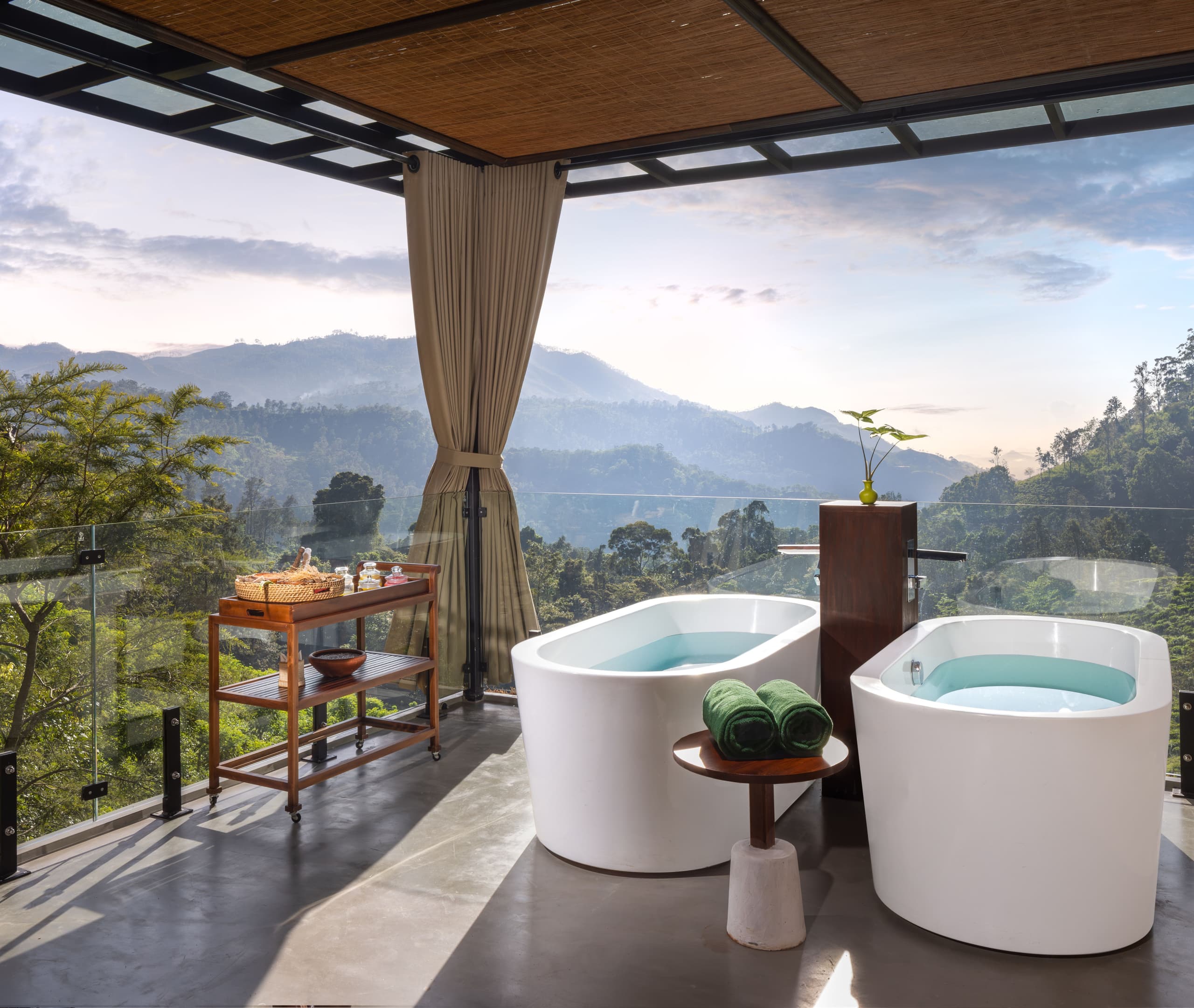
Our preference is a tea estate near Hatton, about 45 minutes away by car, with a fire, a proper dinner and a bath waiting after the descent. Ceylon Tea Trails, five restored planters' bungalows in the estates around Hatton, is the finest of them. In the winter season, Cinnamon Air flies from the international airport to Castlereagh, near Hatton, in about 30 minutes. We cover the hills in December in Nuwara Eliya in December.
If Adam's Peak is not for you
- Little Adam's Peak, near Ella: a short, easy walk with a fine view and none of the night.
- Horton Plains: the walk to World's End at dawn, best from January to March.
- The Knuckles Range: quieter mountains and real trails; see our Knuckles Range guide.
How to fit it into a route
- 01Nights 1 to 3: the Cultural Triangle.
- 02Night 4: Kandy.
- 03Nights 5 and 6: a tea estate near Hatton. Arrive, rest, and climb on the second night, with the next day for sleep.
- 04Nights 7 and 8: Nuwara Eliya and Ella. The railway station at Hatton is on the section still closed after the cyclone, so drive to Nanu Oya for the train to Ella.
- 05On to Yala and the south coast.
This follows our Ceylon Icons journey, with an extra night in the hills. A pilgrimage at night, then a slow day on a tea estate, is also the kind of contrast we build into every trip. That is what Mahinsa founded Siri Siri Lanka Traveller to do: pair the privacy and comfort of a private journey with real time to slow down.
What to book first
- 01A tea estate or guesthouse near the start, for two nights, not one.
- 02A car and driver, for the 1am drive to Nallathanni and the rest of the route.
- 03Your climb night, chosen away from the Poya dates.
- 04Train seats from Nanu Oya to Ella, for after you have recovered.
Who it suits
- Reasonably fit walkers who can manage several thousand steps up and down.
- Travellers interested in faith and culture, for whom the night itself is the point.
- Photographers, for the dawn and the shadow of the peak.
Less suited: anyone with bad knees, young children, those who need a full night's sleep, and visitors outside the season.
If Adam's Peak is on your list, tell us your dates. We will choose a night away from the Poya crowds, put you on a tea estate with the fire lit for your return, and have the car at Nallathanni at 1.30am. Plan my Sri Lanka trip.
Last checked 24 October 2026.
Author @Mahinsa Hennakgedara
Discussion
Your turn — been there, or heading there?
Questions
What people ask us
The pilgrim season begins on the Unduvap Full Moon Poya, Wednesday 23 December 2026, and ends on the Vesak Full Moon Poya, Wednesday 19 May 2027. January to March usually brings the clearest dawns.
The Hatton route from Nallathanni, for almost everyone. It is about seven kilometres and around 5,000 steps, the shortest and steepest of the three, and the best lit and served by tea stalls. The Ratnapura and Kuruwita routes are much longer, through forest.
Most people take three to four hours to climb from Nallathanni and two to three to descend. To reach the summit before sunrise at around 6.30am, start walking between about 1.30 and 2am, earlier on busy nights..
It is possible, but we don't recommend it. Out of season the path is unlit, the stalls are closed and the monsoon brings heavy rain, strong winds and leeches. Since July 2026, off-season access has been limited to two routes, with a pass required.
Full moon Poya nights, long weekends and the Sinhala and Tamil New Year. In 2026–27 the busiest include the opening night on 23 December, Duruthu Poya on 22 January, Navam Poya on 20 February and Medin Poya on 22 March, traditionally the high point of the season.
Journeys
Where this turns into a trip
Each is private and fully adjustable — a shape to start from rather than a package.
Places
Mentioned in this piece

Keep reading
More from the journal
Sri Lanka Travel Guide7 min read
Sri Lanka 14 Day Itinerary: a route that actually works
A sensible two-week Sri Lanka route for first-time visitors: culture, tea country, safari and coast, with honest pacing and the stops worth keeping.
Beaches7 min read
Trincomalee in December: is it worth visiting?
A practical guide to east-coast weather, sea conditions, and what still works in Trincomalee in December — plus what to skip if you want a smooth trip.
Sri Lanka Travel Guide7 min read
Galle Fort travel guide: what to do and how long to stay
A practical guide to Sri Lanka’s best-known fort town: what is worth your time, how long to stay, and when Galle works best in a route.
When you are ready
Turn this into a journey.
Tell us roughly when you want to travel and what matters to you, and we will come back with a considered outline.