Sri Lanka visa in 2026: what travellers need to know
A clear guide to the Sri Lanka ETA, who needs it, what to prepare, and the mistakes that cause delays at the border.
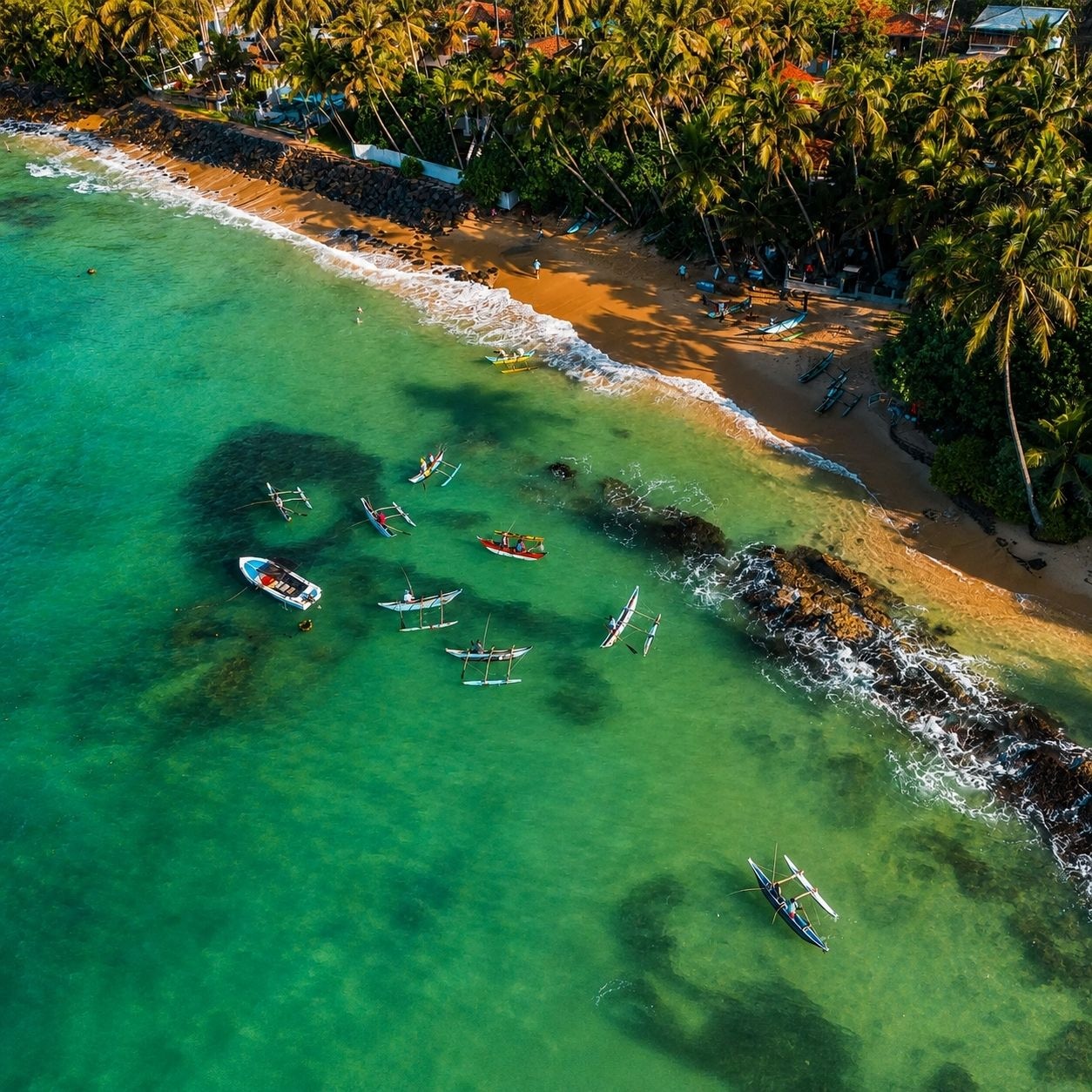
Planning a trip to Sri Lanka? The short answer is this: most travellers need an ETA before arrival, and you should not assume you can sort it out casually at the airport. As of 25 May 2026, some nationalities can receive a 30-day tourist ETA free of charge, but the entry process still matters, and you still need to meet the normal arrival conditions.
If you are booking flights, this is one of the few trip details worth checking early. A valid passport, a confirmed return ticket and proof of enough funds are all part of the process, and it is much easier to get these sorted before you travel than while you are standing at immigration.
What is the Sri Lanka ETA, and do you need one?
The ETA, or Electronic Travel Authorisation, is Sri Lanka’s short-stay entry permission for visitors. In practical terms, it is the standard document most tourists need before they travel, and it leads to a 30-day short visit visa on arrival.
The official system says that all foreign nationals, with limited exceptions, are required to obtain an ETA prior to arrival. The same official site also notes that some travellers from the listed 40 countries are eligible for a free 30-day tourist ETA from 25 May 2026. That is a fee change, not a change that removes the need to pay attention to the process.
What matters for most travellers is simple:
- Do not arrive assuming visa-free entry.
- Apply online in advance unless your circumstances clearly fall under an official exception.
- Keep your ETA approval with you when you travel.
Sri Lanka’s own guidance says the ETA is an electronic authorisation issued online, with no need to endorse it in your passport. That makes it relatively simple, but only if you use the official channel and enter your details correctly.
How do you apply for a Sri Lanka ETA?
The official ETA process is straightforward, but it rewards accuracy. You apply online, wait for approval, and travel with the necessary documents.
The best way to approach it is to do the following:
- 01Check whether you need to pay a fee or qualify for the free 30-day tourist ETA.
- 02Use the official ETA system.
- 03Enter your passport details exactly as they appear in the passport.
- 04Save the approval notice.
- 05Travel with a passport that is valid for at least 6 months from your arrival date.
The official guidance also says you should have a confirmed return ticket and sufficient funds for your stay. Those are normal immigration checks, but travellers often forget them because they focus only on the visa form.
If you are applying close to departure, leave a buffer. The system may be quick, but you should still allow time for mistakes, payment issues, or a referral if the application needs manual review.
tip Apply before you book too much around arrival Do the ETA first, then confirm the rest of your onward plans. A small passport-detail mistake is easier to fix before you have paid for transfers, domestic flights or the first few hotel nights.
What documents and conditions should you prepare?
For a short visit, the official entry conditions are practical rather than complicated. You are mainly proving that you are a genuine visitor and can support yourself during your stay.
You should be ready with:
- A passport valid for at least 6 months from the date you arrive.
- A confirmed return or onward ticket.
- Evidence of sufficient funds for your trip.
- A copy of the ETA approval notice.
In most cases, that is enough for a smooth arrival. The main mistake travellers make is assuming that the ETA approval alone is the whole story. It is not. Immigration officers can still ask for supporting documents at the point of entry.
If you are travelling on a multi-country trip, make sure the passport used in the ETA application is the same travel document you use to enter Sri Lanka. The official system warns that inconsistencies can cause you to have to pay again on arrival.
ETA before arrival, ETA at the airport, or an overseas mission?
There is more than one way to obtain entry permission, but for most travellers the online route is the easiest. Sri Lanka also mentions limited options through overseas missions and, for some travellers, a facility to obtain ETA at Bandaranaike International Airport with extra charges.
For almost everyone booking a holiday, the online ETA is the most sensible choice. The airport option is a fallback, not a planning strategy.
The other point worth noting is that Sri Lanka’s ETA is initially limited to 30 days, although the official guidance says it may be extended for up to six months in some cases. If you think you will want a longer stay, do not assume that extension is automatic. Check the rules before you rely on it.
What changed in 2026?
The biggest practical change this year is the 25 May 2026 update for the 40 countries that qualify for a free 30-day tourist ETA. That is useful, but it does not mean the process disappeared.
The traveller still needs to:
- apply through the proper channel,
- carry a passport valid for 6 months or more,
- have a confirmed return ticket,
- and be able to show funds if asked.
That matters because visa news online is often simplified into “free visa” headlines. In reality, the value is only real if you understand the conditions attached to it.
There is also a practical reason to keep checking official sources close to departure: immigration rules, fee structures and extension procedures can change. For a trip to Sri Lanka, that is not trivia. It affects your booking confidence, your arrival timing and sometimes even your onward route planning.
The cheapest visa is the one you do correctly the first time.
What does the ETA mean for your Sri Lanka itinerary?
If you are planning a one-week or two-week trip, the visa process should be part of the trip design, not an afterthought. Once you know your entry date and length of stay, you can choose a route that makes sense without overcommitting.
For example, if you are arriving into Colombo, you may want a first night close to the airport or in the city, especially if your flight lands late. If your journey is built around culture, the triangle of Colombo, Kandy and Sigiriya fits neatly into a short stay. If you prefer coast and downtime, Galle, Mirissa or Bentota are easier to enjoy when you are not worrying about paperwork.
A sensible first-time plan usually looks like this:
- 01Confirm your ETA situation before you pay non-refundable trip costs.
- 02Book your international flight.
- 03Choose your first 2–3 nights.
- 04Build the inland or coastal route around your arrival airport and travel dates.
- 05Keep your approval, ticket and passport together in one place.
That sequence sounds obvious, but it saves mistakes. Many travellers do it the other way round and end up making the visa fit the itinerary, when it should be the other way around.
Common mistakes that slow travellers down
Most entry problems are avoidable. They usually come from rushing, not from complicated rules.
The most common mistakes are:
- Using a passport that is too close to expiry.
- Entering a passport number incorrectly on the application.
- Travelling without a return or onward ticket.
- Assuming the free ETA removes all other checks.
- Using a different passport at the airport from the one used in the application.
- Leaving the application too late.
If your application is referred, do not panic, but do not ignore it either. Referred cases need more time and attention than ordinary approvals, so they are a good reason to apply early rather than the day before travel.
Sri Lanka’s official instructions also say you should keep a copy of the approval notice for presentation at entry. That is a small thing, but it can smooth the arrival process considerably.
Is the Sri Lanka ETA worth worrying about?
Yes, but not because it is difficult. It is worth caring about because it is one of the few parts of the trip that can affect everything else. A smooth ETA means a smoother arrival, less airport stress and fewer last-minute surprises.
If you are planning a holiday, the best approach is simple:
- Check the current rules.
- Apply through the official system.
- Keep your documents consistent.
- Build your route after the entry details are settled.
For travellers who want a longer, tailor-made journey, this is also the point where a private itinerary can be genuinely helpful. Once the visa and arrival logic are clear, the rest of the trip can be designed around the way you actually like to travel, whether that means wildlife, culture, coast or tea country.
Sri Lanka rewards people who plan well. The visa is just the first piece of that.
Questions
What people ask us
In most cases, yes. Sri Lanka’s official system says foreign nationals need an Electronic Travel Authorisation, or ETA, before arrival, with limited exceptions. Some travellers from the listed countries can receive a 30-day tourist ETA free of charge from 25 May 2026, but the entry process still applies.
The standard tourist ETA is initially valid for 30 days from arrival. Sri Lanka’s official guidance says it may be extended for up to six months in some cases, but that is not automatic. If you think you will need longer, check the extension rules before you travel.
The official guidance asks for a passport valid for at least 6 months from arrival, a confirmed return ticket, and sufficient funds for your stay. It is also sensible to carry a copy of the ETA approval notice, because immigration may ask to see it at the port of entry.
There is a limited facility to obtain an ETA at the port of entry, including at the airport, but additional fees apply. For most travellers, applying online before departure is simpler, cheaper and less stressful than relying on an arrival option.
If your ETA is referred, apply for it as early as possible so there is time for manual review or follow-up. Do not wait until the day before travel. Check your passport details, keep your confirmation, and use the official system rather than a third-party shortcut.
Journeys
Where this turns into a trip
Each is private and fully adjustable — a shape to start from rather than a package.
Places
Mentioned in this piece


Keep reading
More from the journal
Beaches6 min read
Arugam Bay in October: Is It Still Worth Going?
October sits at the edge of Arugam Bay’s surf season, so the answer depends on what you want. Here is the honest version for surfers and non-surfers alike.
Wellness3 min read
Ayurveda, or a spa menu
Sri Lanka has a genuine Ayurvedic tradition and a large industry built on top of it. Telling them apart before you book is worth more than any amount of research afterwards.
Wildlife3 min read
Getting the leopard right
Yala holds the densest leopard population recorded anywhere, and the highest chance of spending your morning in a queue of jeeps. The difference is almost entirely timing.
When you are ready
Turn this into a journey.
Tell us roughly when you want to travel and what matters to you, and we will come back with a considered outline.