Southern Coast
Galle
A Dutch walled port that never modernised out of itself, and is still a town rather than a monument.
- 2 to 3 nights
- Best November to April
The Portuguese fortified this headland in 1588 after being blown into the bay by a storm. The Dutch took it in 1640, rebuilt the walls to a far more serious standard, and laid out the grid of streets and warehouses that survives essentially intact. The British inherited it, then moved the harbour to Colombo — which is the reason Galle Fort is still here. Commercial irrelevance preserved it.
What makes it unusual among walled towns is that people still live in it. There are about four hundred houses inside the ramparts, a mosque, a Dutch Reformed church, a working lighthouse, several schools and a cricket ground immediately outside the walls. It is not an open-air museum with a ticket office; it is a neighbourhood that happens to be surrounded by seventeenth-century fortification.
Over the last two decades a good number of those Dutch merchant houses have become small hotels, galleries and restaurants, which has made the Fort prosperous and slightly self-conscious. It has not yet tipped over into pastiche, but it is closer than it was.
Why come here
What Galle is for
- 01
The walls at either end of the day
You can walk the entire circuit of the ramparts in about an hour. At dawn it belongs to joggers and fishermen; at dusk to the whole town, and to boys throwing themselves off the wall into the sea.
- 02
Domestic architecture
Deep verandahs, lime plaster, columns and internal courtyards designed for heat and monsoon. The best of it is residential and glimpsed through open doors rather than ticketed.
- 03
A base for the whole south
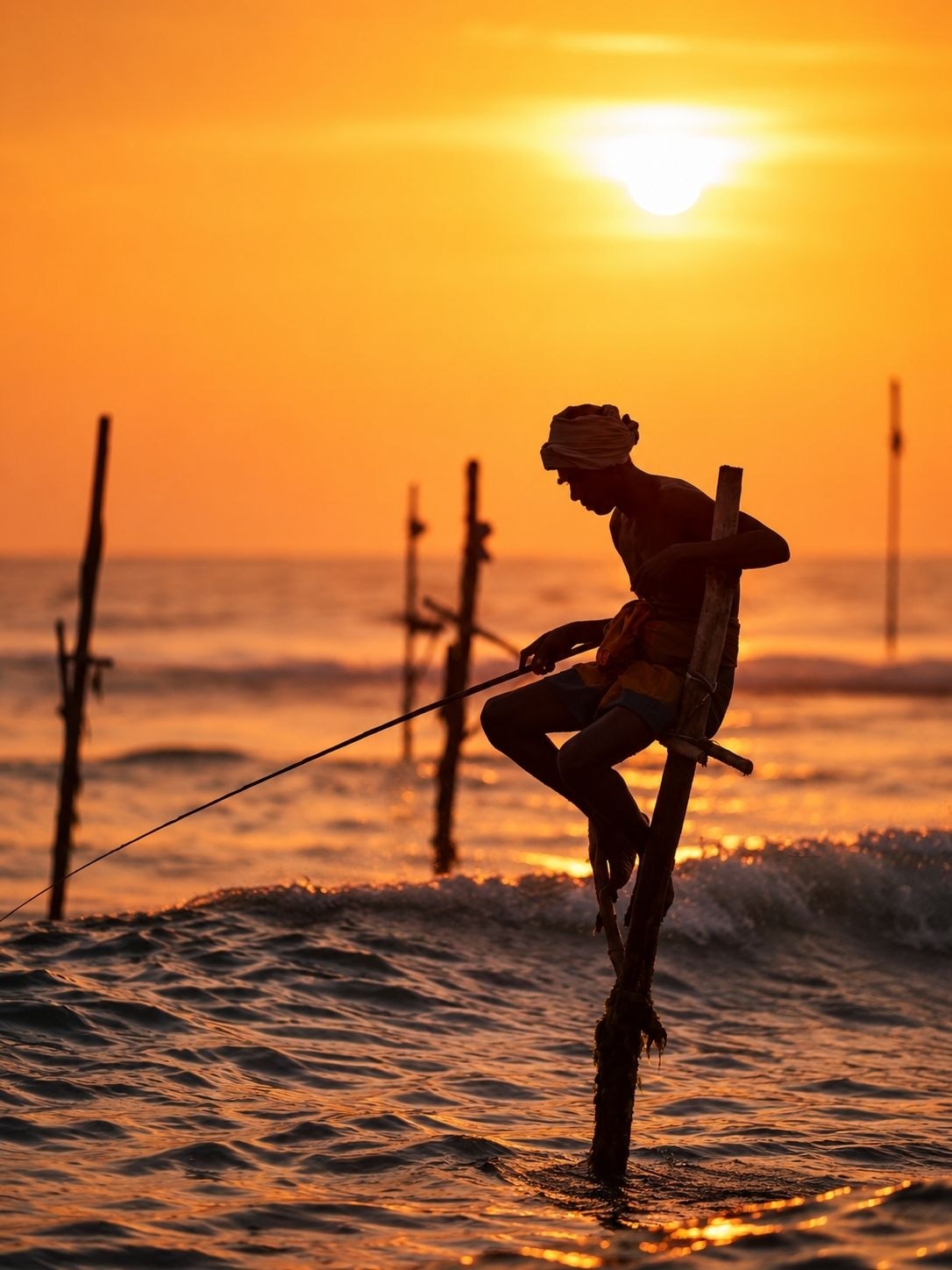
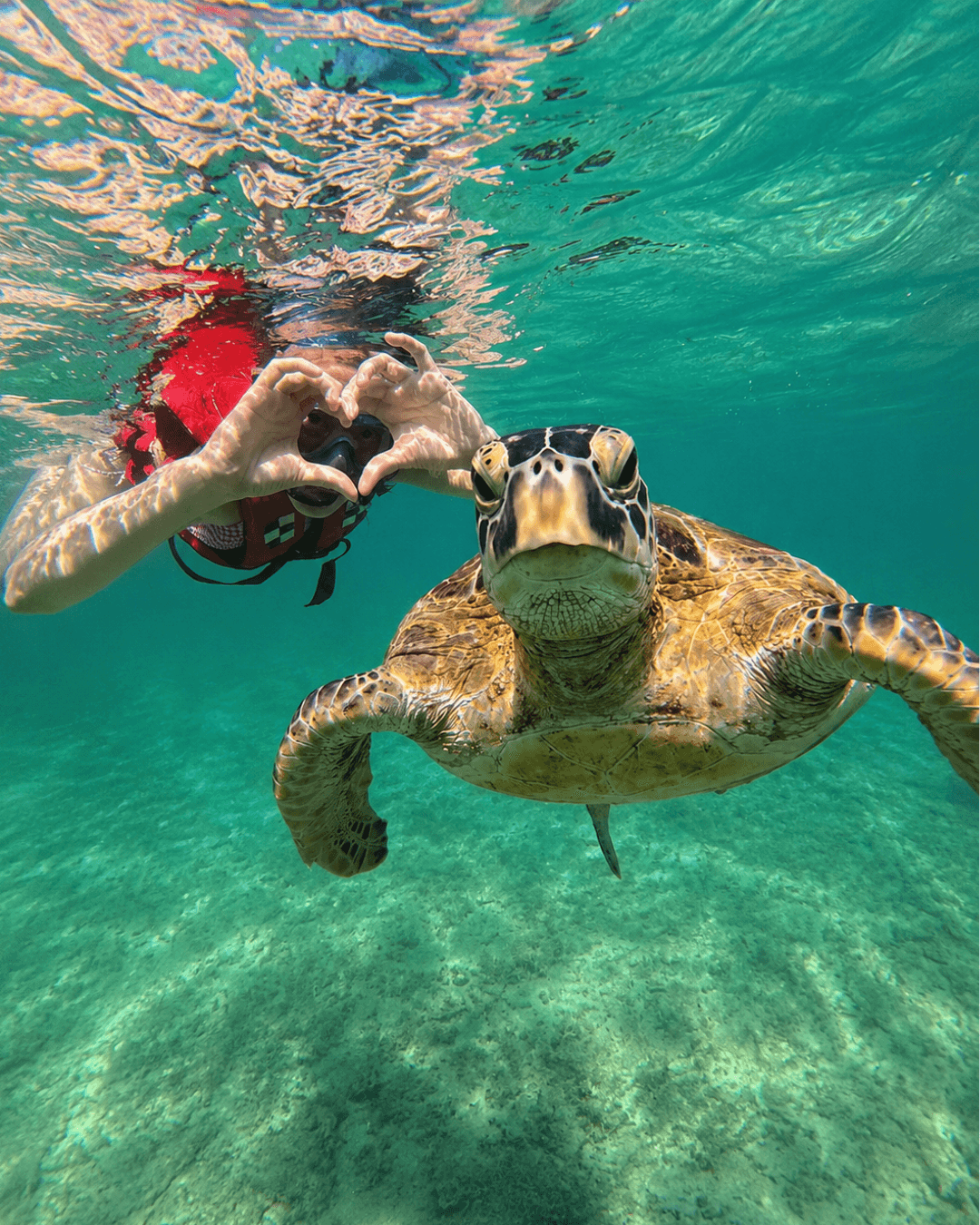
Almost everything on the south coast is within an hour — the beaches, the turtle hatcheries, the stilt fishermen, Mirissa for whales.
One caveat
Galle Fort is small. Two full days inside the walls and you will have seen it twice. It works best as a base you sleep in and return to, rather than as a place you spend whole days trying to fill.
Top experiences
What we would actually do
Not a list of everything possible — the handful of things we put into itineraries, and when.
The rampart walk at sunset
Start at the lighthouse, go anticlockwise, and arrive at Flag Rock as the light goes. This is the thing to do in Galle and it costs nothing.
Inside the Dutch Reformed Church
Built in 1755 on the site of a Portuguese convent, with the floor paved in the tombstones of colonial officials and their families. Sobering and very good.
A morning at the fish market
Outside the walls at the harbour, and entirely unconcerned with visitors. Best before seven.
Bawa at Lunuganga
An hour north near Bentota, Geoffrey Bawa's own garden estate — the single most important piece of modern architecture in the country, and best visited from here.
Highlights
The things themselves
The ramparts
A complete circuit, walkable, free, and open at all hours.
Galle Lighthouse
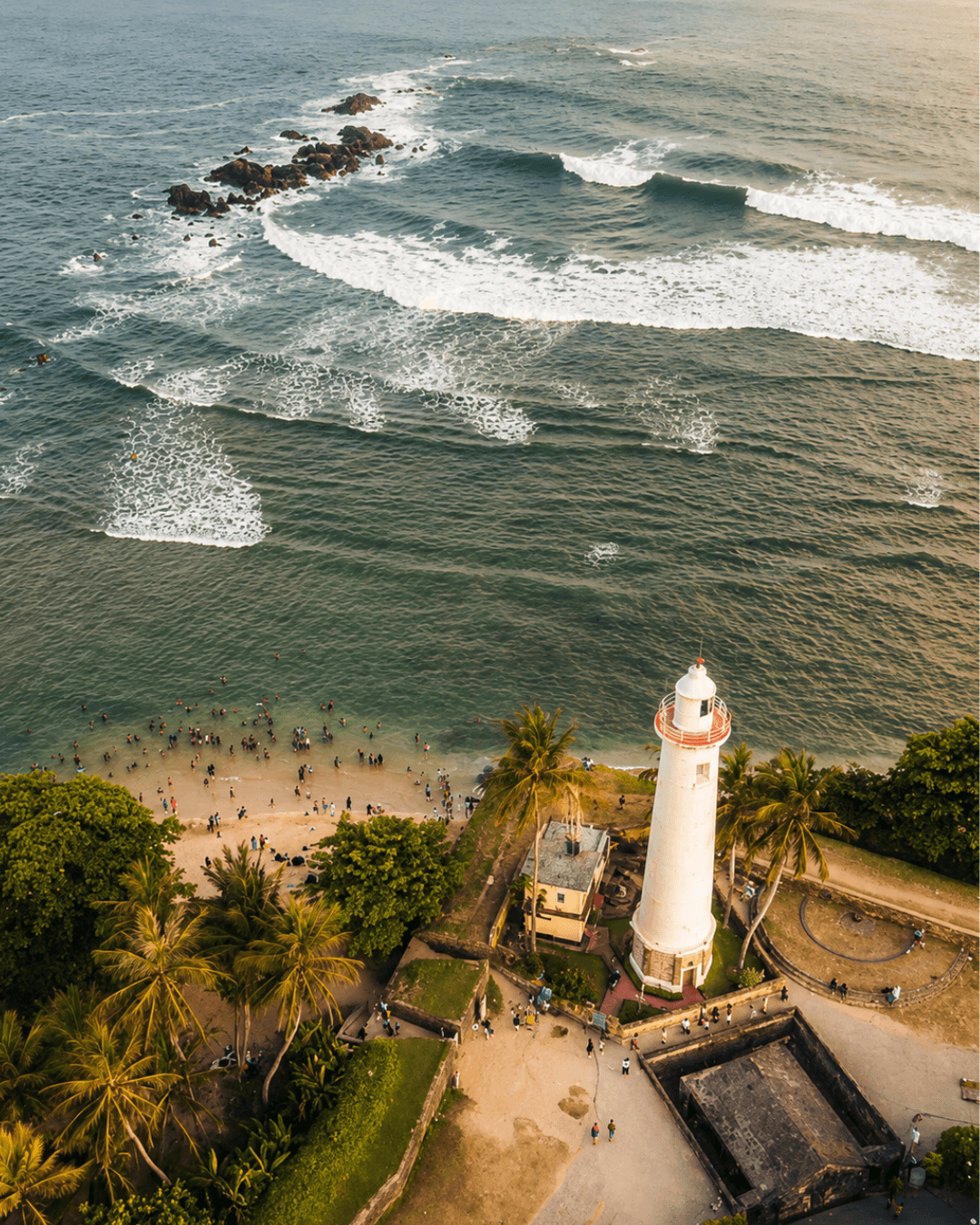
Built by the British in 1939 on the site of an earlier one. The most photographed corner of the Fort.
Dutch Reformed Church
1755, with a floor of gravestones and an original organ loft.
The Maritime Museum
In a Dutch warehouse of 1671; the building is better than the collection.
Meeran Jumma Mosque
White, ornate, and standing where a Portuguese church once did — a neat summary of the Fort's history.
Galle International Stadium
Between the walls and the sea, and among the most beautiful Test grounds anywhere.
Working out how many nights Galle is worth?
It is the question we answer most often, and the honest answer changes with what else is on your route. Tell us where else you are going and we will tell you how long to stay here.
Travel information
The practical part
- Suggested duration
2 to 3 nights
Two nights for the Fort itself, three if you are using it as a base for the wider south coast, which is what we usually suggest.
- Best time to visit
November to April
The south-west coast is dry and the sea is calm in these months. December to March is the reliable heart of it.
When not to come. May to September, when the south-west monsoon brings rough seas and heavy rain to this coast. The east coast is the alternative in those months.
Travel tips
- 01
Stay inside the walls. The Fort at night, once the day visitors have gone, is the reason to be here at all.
- 02
The expressway from Colombo has cut the drive to about two hours. Do not accept a four-hour coastal route unless you actually want the stops.
- 03
Cricket at Galle sells out for Test matches and the ramparts above the ground are free public viewing.
- 04
Gem shops in the Fort are aimed squarely at visitors. Buy stones only through someone you trust.
Recommended journeys
Itineraries that include Galle
Each is private and fully adjustable — a shape to start from rather than a package to buy.
Nearby
What pairs with it
Sri Lanka is small, and the best itineraries cluster rather than criss-cross. These are the natural neighbours.
Questions
About Galle
The Fort has the atmosphere and the food; the beaches west and east of it have the swimming. Most of our itineraries do both — a couple of nights inside the walls, then a few somewhere quieter along the coast.
The Fort itself is a comfortable day. Two to three nights lets you do it slowly and reach the rest of the south without repacking.
Not really inside the Fort — the water below the ramparts is rocky. Unawatuna, ten minutes east, is the nearest proper swimming beach.
Keep reading
More on Galle
Longer pieces from the journal, and the wider trips this place belongs to.
Start planning
Build a journey around Galle.
Tell us when you are thinking of travelling and we will tell you honestly whether Galle is right for those months — and what to pair it with.