Mirissa Whale Watching Season: When to Go and What to Expect
The short answer: plan Mirissa for November to April, but the calmest seas and most reliable sightings are usually later in the season. Here is the honest version.
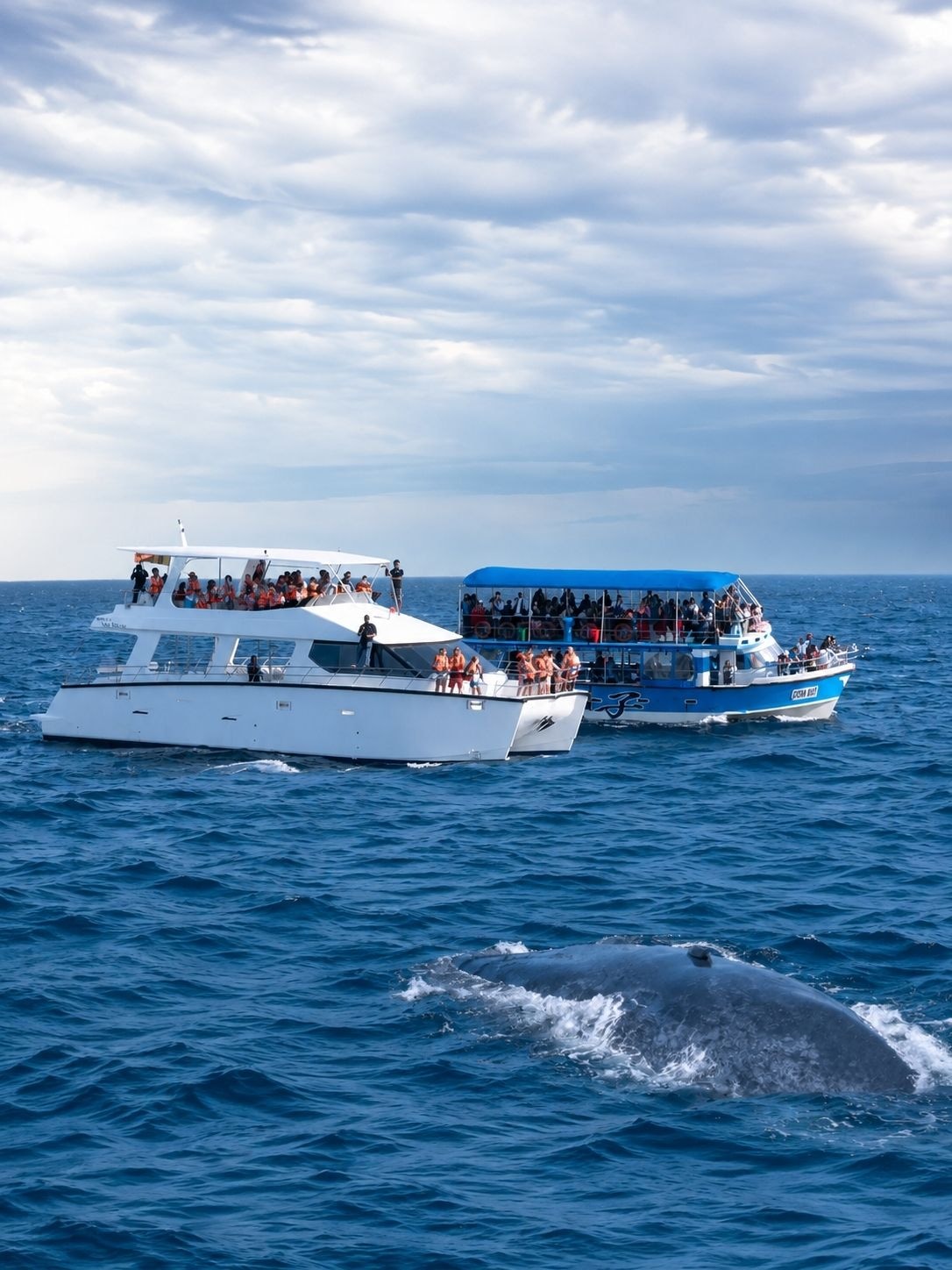
If you are planning Mirissa whale watching season, the simple answer is this: book it for November to April, and treat December to March as the most reliable window. Outside that period, the sea is often rougher and the trip becomes less predictable, so it is usually not worth building your Sri Lanka itinerary around it.
Mirissa works because the southern coast sits on a migration route for blue whales and other marine life, and the harbour departures are straightforward. But this is still a wildlife trip, not an aquarium visit: sightings are never guaranteed, sea state matters a lot, and a good operator is more important than a cheap ticket.
When is the best time for whale watching in Mirissa?
The best time for whale watching in Mirissa is November to April, when the south coast usually has calmer seas and the chance of sightings is strongest. Sri Lanka Tourism’s Mirissa attraction page says the whale and dolphin watching season falls from November to April, while the main tourism weather guidance also describes December to February as peak season on the southwest coast with clearer skies and calmer seas. (srilanka.travel)
If you want the most dependable conditions, aim for:
- Late November through March for the best balance of sea conditions and sightings
- December to February if you want the calmest-feeling trip overall
- April if you are flexible and want to travel before the south coast turns rougher
If whale watching is the reason you are coming, do not gamble on the wrong coast or the wrong month.
The rough rule is simple: Mirissa is a south-coast experience, and the south coast is at its best when the northeast monsoon brings calmer conditions there. In the shoulder months, you may still go out, but you need to accept more cancellations, bumpier crossings, and a lower chance of a clean experience. (srilanka.travel)
What whales and dolphins can you actually see?
In Mirissa, the headline species is the blue whale, and dolphins are also a big part of the trip. Sri Lanka Tourism notes that the waters off Mirissa and Weligama are home to blue whales, Bryde’s whales, sperm whales, fin whales, bottlenose dolphins, common dolphins and spinner dolphins. The same page says whales can be found within roughly eight to ten nautical miles from Mirissa harbour. (srilanka.travel)
That does not mean you will see every species on every outing. What most travellers should expect is:
- Blue whales as the main target species
- Dolphins fairly often, especially if the sea is behaving well
- The occasional sperm whale or other marine life, depending on the day
Sri Lanka Tourism also says there is a 90% opportunity to come across sperm whales from Mirissa and a good chance of seeing blue whales, but treat that as a promotional claim rather than a promise. Wildlife trips vary by sea state, season and luck. (srilanka.travel)
If you are a serious wildlife traveller, Mirissa is still one of the most practical places in Sri Lanka for a marine trip because the boats depart early and the offshore grounds are relatively close. If you only want a beach morning and a guaranteed spectacle, this is the wrong mindset.
Is Mirissa worth it in October or May?
Usually, no, not if whale watching is the main reason for the trip. October sits in Sri Lanka’s second inter-monsoon, when showers can hit across the island and seas can still be unsettled; Sri Lanka Tourism’s weather guide says October–November is the second inter-monsoon and that seas can be rough. Its Mirissa attraction page also describes May–October as the off-season, when the sea gets a bit rough. (srilanka.travel)
Here is the practical comparison:
If your dates are in mid-October, I would not plan the trip around a whale boat. If you are there in late November, then it starts to make sense.
What does the boat trip actually look like?
Sri Lanka Tourism says Mirissa boat departures usually start around 6.30 am from the fisheries harbour, and the total trip is typically 3 to 4 hours, depending on sea conditions. That early start matters: it is calmer, the light is better, and the heat is less punishing. (srilanka.travel)
A realistic morning usually looks like this:
- 01Meet at the harbour before sunrise.
- 02Board a registered boat and head offshore.
- 03Spend time scanning for surface blows, birds and movement.
- 04Follow sightings at a respectful distance.
- 05Return by late morning if conditions are decent.
A few honest expectations help here:
- You may feel motion sickness even if you are usually fine on boats
- The sea can be much rougher than it looks from shore
- Even on a good day, the trip can feel long if you are waiting for a sighting
- If you are unlucky, you may see only dolphins or no whales at all
That is why Mirissa is better for travellers who like wildlife and accept uncertainty, not for people who want a guaranteed attraction in the way they might want a monument or museum.
How do you choose a responsible operator?
This matters more than many travellers realise. Sri Lanka has official whale and dolphin watching regulations and guidance, and the country’s responsible whale watching handbook states that vessels should keep at least 100 metres from whales, with engines switched off at that distance for whales. It also says the activity is regulated under the Sea Mammals (Observation, Regulation and Control) Regulations, No. 1 of 2012. (wwhandbook.iwc.int)
A good operator should feel organised, not aggressive. Look for:
- A registered boat with life jackets and clear safety equipment
- A crew that does not chase animals
- A boat that keeps sensible distances rather than cutting across sightings
- Clear communication about weather and cancellation policy
- A departure time that is genuinely early morning, not a late-morning convenience slot
Avoid boats that promise certainty or make the wildlife sound staged. If a seller says you will definitely see whales, that is a red flag.
tip Book the boat before you book the beach stay If Mirissa whale watching is important to you, choose your boat operator first and then build the rest of the coast plan around it. That gives you more room to move dates if sea conditions are poor.
How should you combine Mirissa with the rest of the south coast?
Mirissa works best as part of a south-coast loop, not as a standalone overnight stop for every traveller. It sits neatly between Galle, Bentota, and the wider beach belt, so you can pair the whale boat with slower beach time, cafés, or a short coastal drive.
For most travellers, the trip works best like this:
- 1 night if whale watching is the only reason you are stopping
- 2 nights if you want a relaxed pace and a backup morning in case of rough seas
- 3 nights only if you also want to use Mirissa as a base for beach time, food and day trips
A sensible south-coast sequence is often Galle → Mirissa → Bentota or Bentota → Galle → Mirissa, depending on where you are arriving from. If you are already coming down from the hill country, Mirissa is usually easier to fit in after Ella or Yala than before them.
Mirissa is not the place to rush. If you arrive late at night, wake up too early, and leave straight after the boat, you turn a potentially good coastal stop into a very tiring logistics exercise.
Who is Mirissa whale watching best for?
Mirissa is best for travellers who want a real wildlife experience and are happy to accept nature on its own terms. It is a strong fit if you:
- Want a November to April coastal trip
- Are comfortable leaving very early
- Do not mind an unplanned morning
- Enjoy wildlife even when the viewing is brief or imperfect
It is less suitable if you:
- Travel badly on boats
- Have only a single day on the south coast
- Are visiting in the off-season and still expect a prime whale trip
- Want a guaranteed, low-variation sightseeing stop
The most important thing to remember is that Mirissa is not “worth it” because it is fashionable. It is worth it when the season is right, the sea is calm, and you treat the trip as a wildlife outing rather than a box to tick.
A private, tailor-made itinerary can also help you time Mirissa against the rest of Sri Lanka properly, especially if you are trying to combine the south coast with the Cultural Triangle or hill country without wasting days in transit.
Quick planning checklist
Before you book, check these five things:
- Your month: ideally November to April
- Your sea tolerance: be honest about motion sickness
- Your operator: registered, safe, and not pushy
- Your backup plan: beach time if the boat cancels
- Your route: do not force Mirissa into the wrong side of the monsoon calendar
If you get those five right, Mirissa is one of the more rewarding marine wildlife outings in Sri Lanka.
FAQ
What is the best month for whale watching in Mirissa?
The most reliable months are generally December to March, with the wider season running from November to April. Those months usually offer calmer seas and the best balance between comfort and sighting chances. If your dates are flexible, avoid the rougher shoulder periods unless you are happy to gamble on conditions.
Can you see whales in Mirissa in October?
Sometimes, but it is not the best time to plan around. October falls in the second inter-monsoon period, when weather can be mixed and the sea can still be rough. If whale watching is a priority, it is better to wait until late November or later.
How long is a whale watching trip in Mirissa?
Sri Lanka Tourism says the trip usually lasts 3 to 4 hours, with departures starting around 6.30 am from the fisheries harbour. The exact timing depends on sea conditions and how far the boats need to travel to find wildlife.
Is whale watching in Mirissa safe?
It can be safe when you choose a properly registered operator and follow crew instructions, but it is still a boat trip at sea. Look for life jackets, safety equipment, and responsible viewing distances. If the sea is rough or you feel uncomfortable, it is better to skip it.
Is Mirissa better than Trincomalee for whale watching?
They are different seasonal bets. Mirissa is the better-known south-coast option from November to April. Trincomalee is often discussed as the eastern-coast alternative when the south is rougher. The better choice depends on your travel dates and the rest of your route.
Questions
What people ask us
The most reliable months are generally December to March, with the wider season running from November to April. Those months usually offer calmer seas and the best balance between comfort and sighting chances. If your dates are flexible, avoid the rougher shoulder periods unless you are happy to gamble on conditions.
Sometimes, but it is not the best time to plan around. October falls in the second inter-monsoon period, when weather can be mixed and the sea can still be rough. If whale watching is a priority, it is better to wait until late November or later.
Sri Lanka Tourism says the trip usually lasts 3 to 4 hours, with departures starting around 6.30 am from the fisheries harbour. The exact timing depends on sea conditions and how far the boats need to travel to find wildlife.
It can be safe when you choose a properly registered operator and follow crew instructions, but it is still a boat trip at sea. Look for life jackets, safety equipment, and responsible viewing distances. If the sea is rough or you feel uncomfortable, it is better to skip it.
They are different seasonal bets. Mirissa is the better-known south-coast option from November to April. Trincomalee is often discussed as the eastern-coast alternative when the south is rougher. The better choice depends on your travel dates and the rest of your route.
Journeys
Where this turns into a trip
Each is private and fully adjustable — a shape to start from rather than a package.
Places
Mentioned in this piece

Keep reading
More from the journal
Sri Lanka Travel Guide5 min read
Sri Lanka in December: where to go and what to book first
December is one of the best months for the south and west coasts, and one of the busiest. Here is how to pick the right side of the island and book the parts that sell out.
Wildlife3 min read
Getting the leopard right
Yala holds the densest leopard population recorded anywhere, and the highest chance of spending your morning in a queue of jeeps. The difference is almost entirely timing.
Beaches8 min read
Bentota in December: Is It Worth Visiting?
A practical guide to beach conditions, weather trade-offs and who should choose Bentota in December, plus when to book and when to look elsewhere.
When you are ready
Turn this into a journey.
Tell us roughly when you want to travel and what matters to you, and we will come back with a considered outline.