Northern Province
Jaffna
Culturally closer to Tamil Nadu than to Colombo, and only recently reachable again.
- 2 to 3 nights
- Best January to September
Jaffna is a flat limestone peninsula at the top of the island, and it is the part of Sri Lanka that feels least like the rest of it. The language is Tamil, the religion is largely Hindu, the tree is palmyra rather than coconut, and the food is hotter and built around crab and seafood in ways the south is not.
The civil war ended in 2009 and the peninsula was among the worst affected places in the country. That is visible: in shelled buildings left standing, in military land that has only partly been returned, and in a population that has been displaced and returned more than once. It is not a difficult or dangerous place to visit, but it is a place where a certain amount of tact is warranted, and where "what happened here" is a live question rather than a historical one.
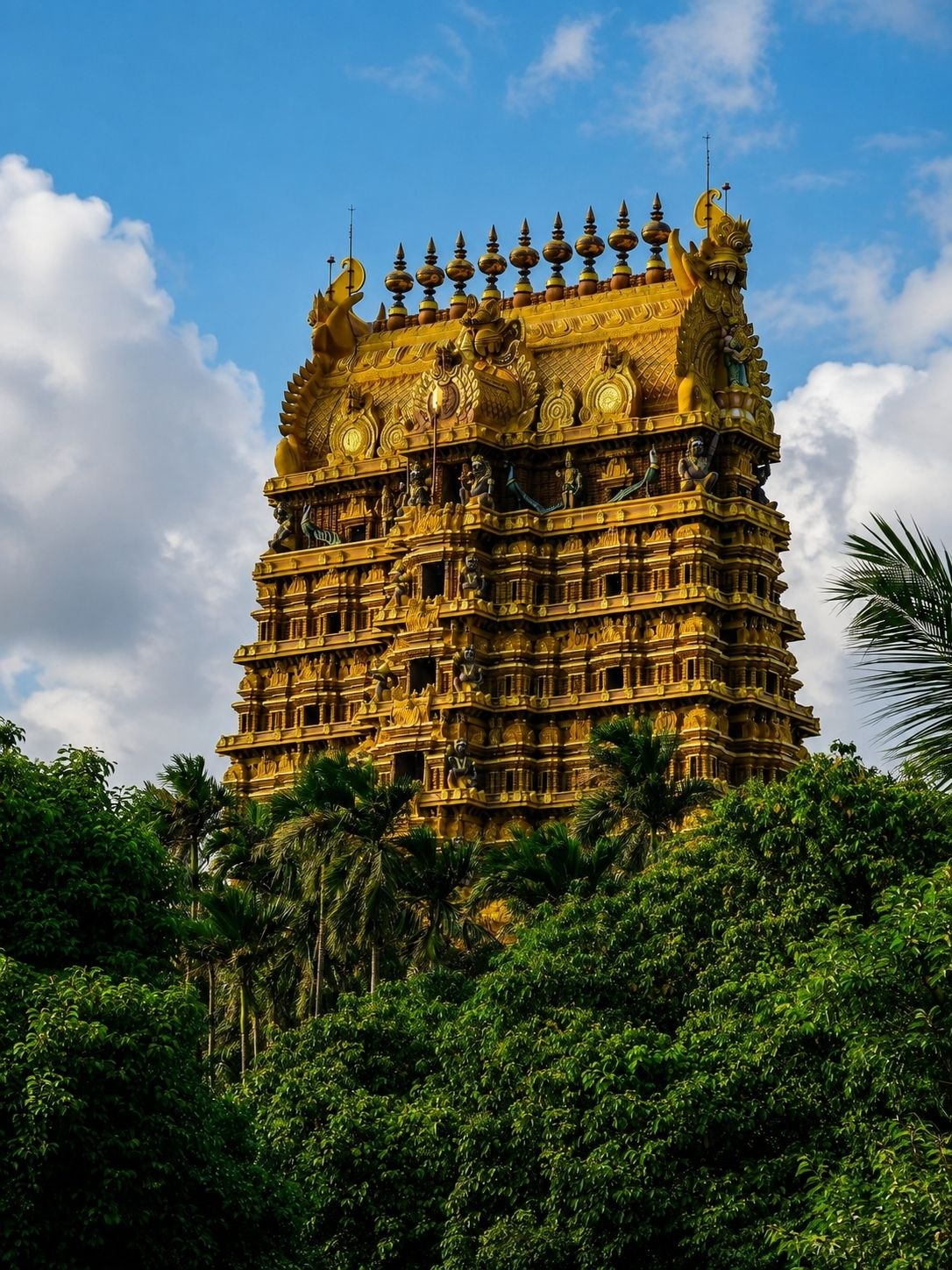
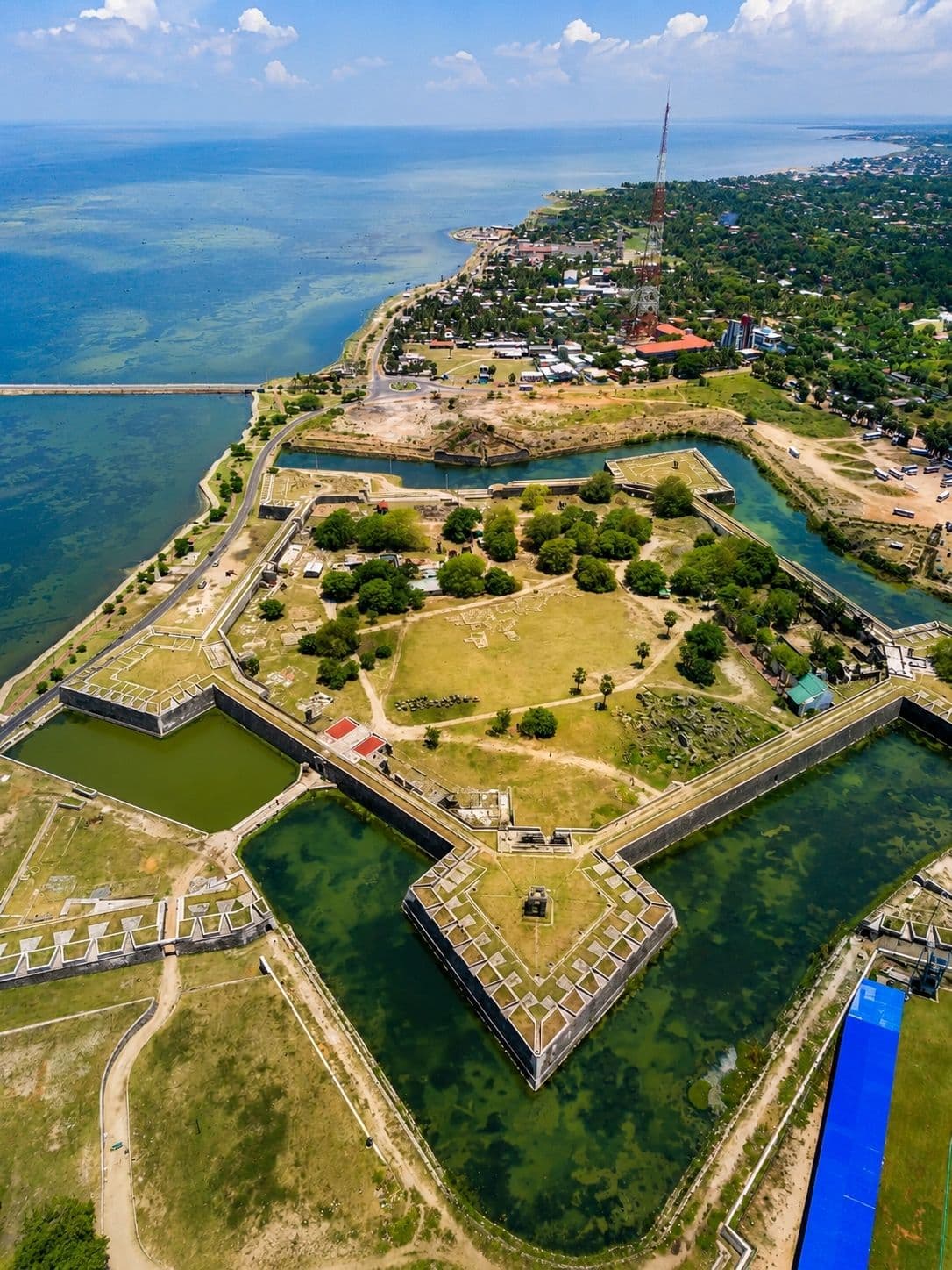
What draws people is the difference. Nallur Kandaswamy, a working kovil of real importance. A fort the Portuguese began and the Dutch finished. A scatter of islands reachable by causeway and ferry, one of which has a population of feral ponies descended from Dutch stock.
It is a long way from everywhere else, and that is the main argument against including it.
Why come here
What Jaffna is for
- 01
A genuinely different culture
Sri Lankan Tamil society in the north has its own architecture, cuisine, music and religious calendar. Visiting only the south and calling it Sri Lanka is a bit like visiting only England and calling it Britain.
- 02
The islands
Delft, Nainativu and Karainagar are reached by causeways over pale shallow water and by small ferries. Delft in particular — coral walls, baobabs, wild ponies — does not feel like anywhere else in South Asia.
- 03
The food
Jaffna crab curry, odiyal kool, palmyra everything. It is the most distinctive regional cuisine on the island and it is largely unavailable elsewhere.
One caveat
Jaffna is an eight-hour drive from Colombo or a short flight, and it is not a place of set-piece sights. If you have ten nights and a long list, it will not fit, and forcing it in produces a rushed version of a place whose whole quality is that it is unhurried.
Top experiences
What we would actually do
Not a list of everything possible — the handful of things we put into itineraries, and when.
Evening puja at Nallur Kandaswamy
Men remove their shirts to enter, drums and nadaswaram play, and the scale of the devotion is startling. The August festival runs for twenty-five days and is extraordinary.
The ferry to Delft
A slow boat to an island of coral-block walls, a Dutch fort, an enormous baobab and several hundred feral ponies. A full day, and the best one here.
Point Pedro and the northern shore
The northernmost point of the island, with palmyra plantations and quiet beaches on the way. It is a landscape with no southern equivalent.
Jaffna Public Library
Rebuilt after it was burned in 1981 with the loss of ninety thousand volumes — an event that matters enormously to how the war is understood. Worth going, and worth knowing why.
Highlights
The things themselves
Nallur Kandaswamy Kovil
The most significant Hindu temple in the country, gold-roofed and constantly in use.
Jaffna Fort
Portuguese in origin, Dutch in its surviving pentagonal form, heavily damaged in the war and partly restored.
Delft Island
Coral walls, baobabs, a ruined Dutch stable and wild ponies.
Nagadeepa
A Buddhist temple and a Hindu kovil on the same small island, reached by ferry — an unusually direct picture of the island religious map.
Casuarina Beach
Shallow, calm and almost empty, on Karainagar island.
Working out how many nights Jaffna is worth?
It is the question we answer most often, and the honest answer changes with what else is on your route. Tell us where else you are going and we will tell you how long to stay here.
Travel information
The practical part
- Suggested duration
2 to 3 nights
Two nights covers the town and one island. Three lets you do Delft properly without spending the day watching the clock for the return ferry.
- Best time to visit
January to September
The north is dry when the north-east monsoon is not running. It is hot and flat with little shade, so mornings and late afternoons are when you want to be outside.
When not to come. October to January, when the north-east monsoon brings the peninsula its rain.
- Getting there
- Roughly eight to nine hours by road from Colombo on the A9, or about an hour by domestic flight from Ratmalana to Jaffna. Most itineraries that include Jaffna fly one way and drive the other, breaking the drive at Anuradhapura or Trincomalee.
Travel tips
- 01
Fly rather than drive if time is short — there are domestic flights from Ratmalana that take about an hour against eight or nine hours on the A9.
- 02
Dress conservatively at kovils. Men are required to remove their shirts to enter the inner areas at Nallur.
- 03
Some land remains under military control and photographing installations is not acceptable. Your guide will know where the lines are.
- 04
Ask before photographing people or damaged buildings. The war is within living memory for everyone you meet.
Nearby
What pairs with it
Sri Lanka is small, and the best itineraries cluster rather than criss-cross. These are the natural neighbours.
Questions
About Jaffna
Yes. The war ended in 2009 and Jaffna is an ordinary, functioning provincial city. The caution required is social rather than physical — being thoughtful about photography, military areas and how you ask about the past.
On a first two-week trip, usually not — it competes with the hill country and the coast and it will lose. On a second visit, or a longer first one, it is the most interesting thing you can add.
Yes, and it is the sensible way to do it. Jaffna down to Trincomalee via the A9 and the eastern road makes a coherent northern loop, and both are dry in the same months.
Start planning
Build a journey around Jaffna.
Tell us when you are thinking of travelling and we will tell you honestly whether Jaffna is right for those months — and what to pair it with.