Jaffna travel guide: what to see, when to go, and why it deserves three nights
Sri Lanka's Tamil north feels like a different country: temples, palmyra roads, island ferries and the island's most distinctive food. Here is how to reach it, when to go, and a three-day plan that works.
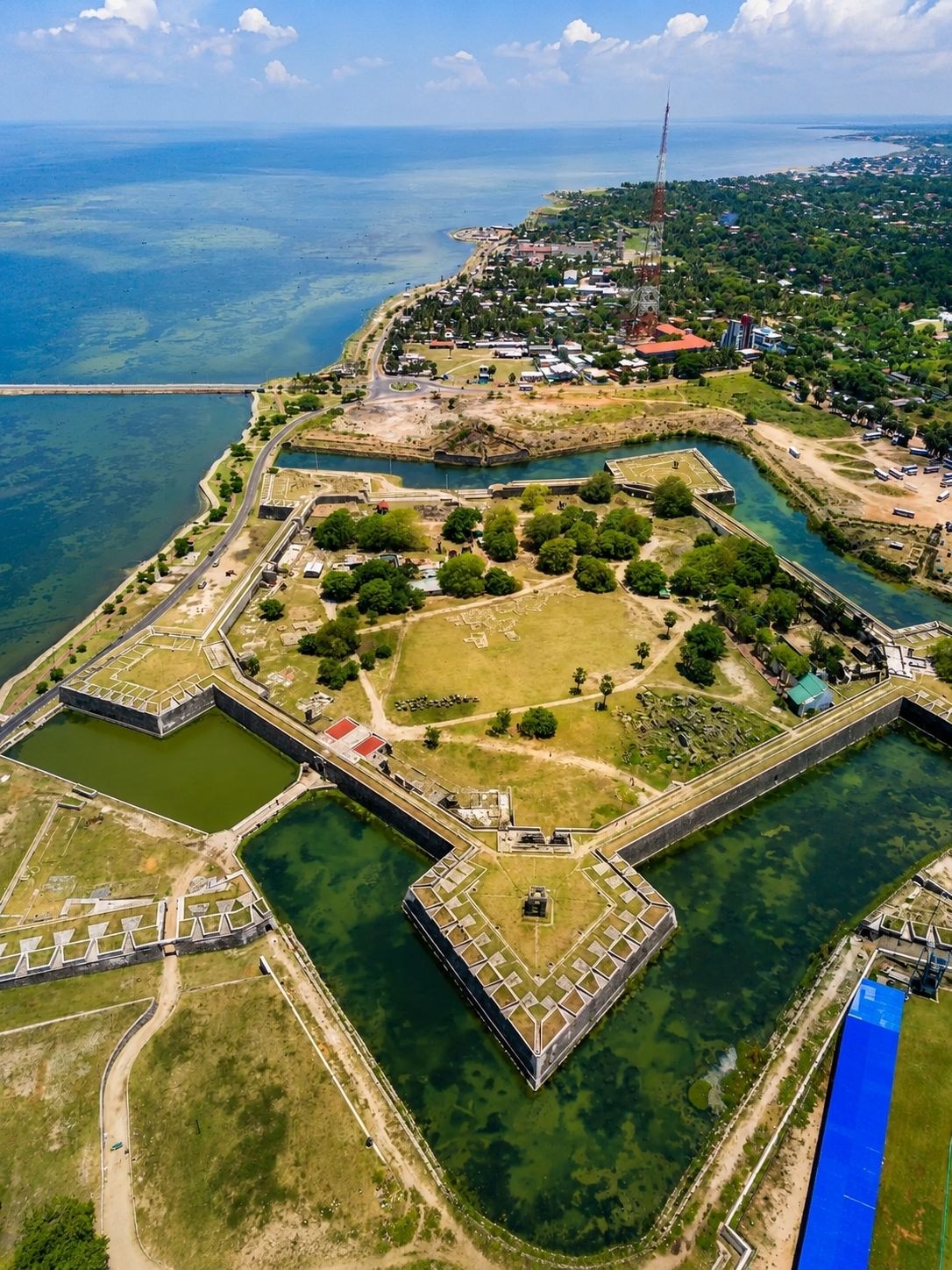
Jaffna is worth at least three nights. Sri Lanka's Tamil north feels like a different country: Hindu temples, palmyra-lined roads, island ferries and the island's most distinctive food. Go between February and September, travel up by train or by car with a night in Anuradhapura, and give the islands a full day.
Most first-time visitors never come this far north, and most of those who do treat Jaffna as a quick detour. Both are mistakes. The peninsula is not built around one great sight; it rewards slow mornings, long lunches and roads that end at the sea.
Is Jaffna worth visiting?
Yes, if you want to see a side of Sri Lanka the classic route leaves out.
What Jaffna does well
- Temples. Nallur Kandaswamy Kovil above all, and hundreds of smaller shrines along the peninsula's lanes.
- Food. Crab curry, palmyra sweets, Jaffna mangoes and seafood cooked differently from anywhere in the south.
- The islands. Ferries to Nainativu and Delft, flat, quiet and unlike anywhere else in the country.
- A different rhythm. Tamil language, bicycles, markets and very few tour buses.
What Jaffna does not do well: polished beach holidays, nightlife, quick visits, and the months from October to December, when the rain arrives here first.
When to go
- February to September: the dry season, and our first choice. Hot, bright and settled, with calm water for the island ferries.
- October to December: the wet season. The north-east monsoon reaches Jaffna first, November is usually the wettest month, and ferries can be cancelled when the sea is up.
- January: the change of season. Often good, but showers linger in some years.
We explain how the northern rains work in Sri Lanka's north-east monsoon, and what October is like in Jaffna in October.
Getting there
The Northern Line reopened after Cyclone Ditwah, and the Yal Devi has run again since May 2026, northbound on Mondays, Wednesdays and Fridays. By road, the A9 runs north through Anuradhapura and Vavuniya; we would always break the journey, so the drive is two comfortable days rather than one long one. We compare every option in Colombo to Jaffna.
There are no scheduled domestic flights from Colombo to Jaffna at present, though small aircraft can be chartered. From India, IndiGo flies daily between Chennai and Jaffna's airport at Palaly, and a passenger ferry from Nagapattinam to Kankesanthurai has run on and off since 2023, usually pausing in the monsoon months.
Jaffna is not far away. It just asks you to arrive slowly, and that turns out to be the point.
What to see in and around the city
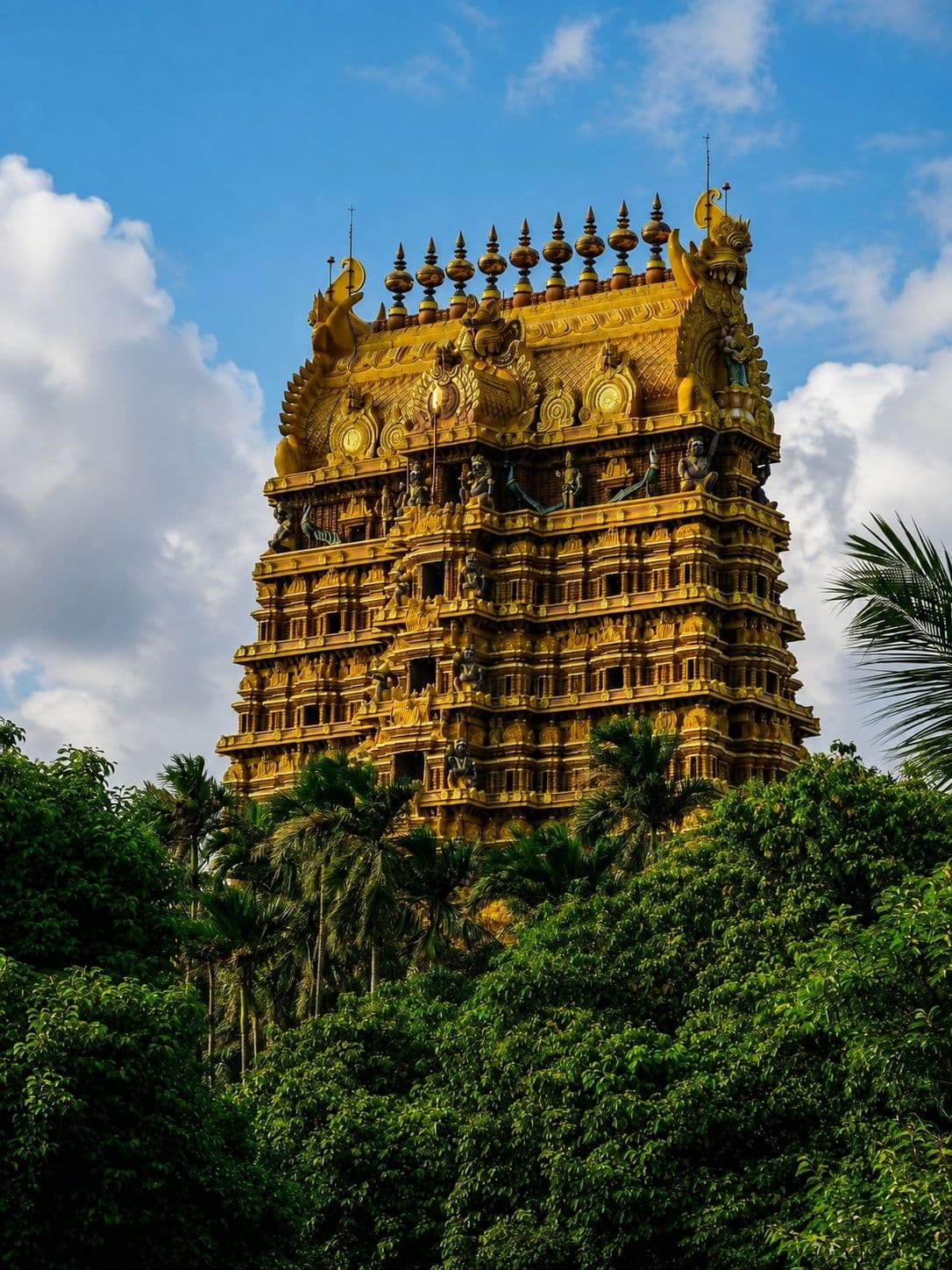
- Nallur Kandaswamy Kovil. The golden heart of Jaffna's religious life. Come for the evening puja, when the drums and bells fill the courtyard.
- Jaffna Fort. A Dutch star fort by the lagoon, best in the late afternoon light.
- Jaffna Public Library. Rebuilt after its destruction in 1981, and a quiet, moving place to visit.
- The market. Mangoes, palmyra jaggery, dried fish and spices, busiest in the morning.
- Keerimalai. Freshwater springs by the sea on the northern coast, where locals bathe beside a temple.
- Point Pedro. The northernmost point of the island, a fishing town with a quiet seafront.
- Kadurugoda. A small field of ancient Buddhist stupas, a reminder of the peninsula's older layers.
- Casuarina Beach. Shallow water and pine-like trees on the island of Karainagar, for an easy afternoon.
The islands
The islands off the peninsula are the most unusual part of a Jaffna trip, and deserve a day of their own. Causeways link the nearer ones, and ferries leave from Kurikadduwan jetty.
Nainativu is a short ferry ride away and holy to two faiths: the Buddhist Nagadeepa Vihara and the Hindu Nagapooshani Amman Kovil stand on the same small island. Delft, further out, is flat and windswept, with coral-stone walls, a lone baobab tree and wild ponies descended from those the Dutch once kept.
Leave early, as ferries are weather-dependent and crowded on holidays and Poya days. Travel with a guide or driver who knows the timetables, and expect the plan to bend if the sea is rough.
What to eat
Jaffna's cooking is hotter, more seafood-led and more distinctive than anything in the south.
- Jaffna crab curry, thick, dark and fiercely spiced.
- Odiyal kool, a seafood broth thickened with palmyra flour.
- Palmyra everything: jaggery, sweets and the fruit itself in season.
- Jaffna mangoes, from about April to June.
- Dosa, vadai and string hoppers for breakfast, in small local places.
If you prefer milder food, say so clearly. If you like heat, Jaffna will not disappoint you.
Etiquette and practicalities
- At Nallur, men remove their shirts before entering the inner temple, and everyone removes their shoes. Women should cover their shoulders and knees.
- Tamil is the language of daily life, and a simple "vanakkam" goes a long way.
- Do not photograph military sites or checkpoints.
- Carry cash for markets, ferries and temples outside the city.
- Hire a driver or tuk-tuk for the day, as the peninsula is spread out and the midday heat is fierce.
Dates and changes worth knowing
- Sunday 8 November 2026: Deepavali, the festival of lights, celebrated across the north.
- Tuesday 24 November: Il Full Moon Poya, a public holiday; ferries and temples are busier.
- Friday 15 January 2027: Thai Pongal, the Tamil harvest festival and one of the best days of the year to be in Jaffna.
- Saturday 6 March 2027: Mahasivarathri, a night of devotion in the Shiva temples.
- Late July to August 2027: the 25-day Nallur festival, with chariot processions and huge crowds. Book months ahead.
- Trains: the Intercity Express runs only from Friday to Monday for now, and the Yal Devi on alternate days.
A three-day plan
- 01Day 1: arrival and Nallur. Arrive by train or car, rest through the heat, and go to Nallur for the evening puja.
- 02Day 2: the islands. An early ferry to Nainativu, and on to Delft if the sea allows, back for a late seafood dinner.
- 03Day 3: the city and the north coast. The Fort and the library in the morning, the market, then Keerimalai, Point Pedro and Casuarina Beach in the afternoon.
How Jaffna fits a wider route
Between February and September, the north and east are at their best together, and a loop through both is one of our favourite routes for a second visit.
- 01Night 1: Anuradhapura. The ancient capital, breaking the drive north.
- 02Nights 2 to 4: Jaffna. The plan above.
- 03Nights 5 to 7: Trincomalee. About five hours down to the east coast, for beaches and Pigeon Island; see Colombo to Trincomalee.
- 04Nights 8 to 10: the Cultural Triangle. Sigiriya and Dambulla, then home.
You can also add three nights in Jaffna to the start of our Ceylon Icons journey. Jaffna is exactly the kind of place we built Siri Siri Lanka Traveller for: Mahinsa founded it to pair the privacy and comfort of a private journey with real time to slow down, and the north rewards both.
What to book first
- 01Your train seats, on the day the 30-day window opens, or a car and driver for the A9.
- 02A comfortable base in Jaffna, especially around Thai Pongal and the Nallur festival.
- 03A driver-guide for the islands day, who knows the ferry times.
- 04Your night in Anuradhapura, to break the journey.
Who Jaffna suits
- Second-time visitors who have seen the classic route.
- Food lovers, for a cuisine the south does not cook.
- Travellers interested in culture and history, and in the Tamil north in particular.
- Visitors from India, with a daily flight from Chennai.
Less suited: beach-only holidays, very short trips, and anyone travelling between October and December.
If you would like Jaffna on your route, tell us your dates. We will choose the train or the road, time the islands for a calm sea, and make sure you are at Nallur when the drums begin. Plan my Sri Lanka trip.
Last checked 20 October 2026.
Author @Mahinsa Hennakgedara
Discussion
Your turn — been there, or heading there?
Questions
What people ask us
At least three nights. That gives you one day for Nallur and the city, one for the islands of Nainativu and Delft, and one for the Fort, the market and the north coast. A single night is too rushed for the distance it takes to get there.
From February to September, the dry season, when days are hot and bright and the sea is calm for the island ferries. October to December is the wet season, when the north-east monsoon arrives in the north first and November is usually the wettest month.
By train or by road. The Yal Devi runs on alternate days, the Intercity Express currently runs Friday to Monday, and the Night Mail runs daily. By private car, the drive takes eight to nine hours with stops, and is best split with a night in Anuradhapura.
There are no scheduled domestic flights from Colombo at present, though small aircraft can be chartered. From India, IndiGo flies daily between Chennai and Jaffna's airport at Palaly in about an hour and ten minutes.
Men remove their shirts before entering the inner temple, and everyone removes their shoes. Women should wear clothing that covers the shoulders and knees. Come for the evening puja, when the temple is at its most atmospheric.
Journeys
Where this turns into a trip
Each is private and fully adjustable — a shape to start from rather than a package.
Places
Mentioned in this piece
Keep reading
More from the journal
Sri Lanka Travel Guide7 min read
Sri Lanka 14 Day Itinerary: a route that actually works
A sensible two-week Sri Lanka route for first-time visitors: culture, tea country, safari and coast, with honest pacing and the stops worth keeping.
Beaches7 min read
Trincomalee in December: is it worth visiting?
A practical guide to east-coast weather, sea conditions, and what still works in Trincomalee in December — plus what to skip if you want a smooth trip.
Sri Lanka Travel Guide7 min read
Galle Fort travel guide: what to do and how long to stay
A practical guide to Sri Lanka’s best-known fort town: what is worth your time, how long to stay, and when Galle works best in a route.
When you are ready
Turn this into a journey.
Tell us roughly when you want to travel and what matters to you, and we will come back with a considered outline.